

From measuring liquids to preparing solutions and conducting experiments, laboratory glassware remains essential across research, healthcare, pharmaceutical, industrial, and educational laboratories.
Although many glassware products look relatively simple, choosing them requires attention to function, capacity, measurement requirements, material properties, and handling conditions.
For buyers in Hyderabad, understanding these differences can prevent the common mistake of treating all laboratory glassware as interchangeable.
Different Glassware Has Different Functions
Laboratory glassware is designed around specific tasks.
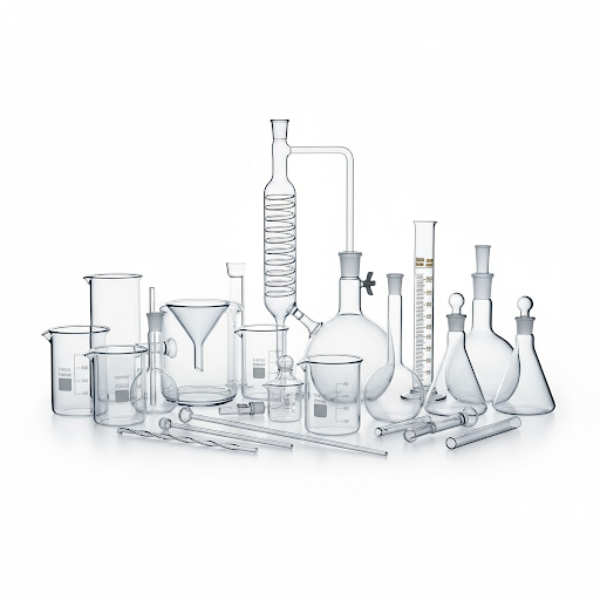
Frequently used items include:
- Beakers
- Conical flasks
- Volumetric flasks
- Measuring cylinders
- Pipettes
- Burettes
- Test tubes
- Reagent bottles
- Funnels
- Watch glasses
A beaker may be convenient for holding, mixing, or heating liquids, but it is generally not selected when highly accurate volume measurement is required.
Volumetric glassware, by comparison, is intended for applications where volume accuracy is more important.
Understanding the function of each item is the first step toward better selection.
Determine Whether Measurement Accuracy Matters
Not every laboratory task requires the same level of accuracy.
For routine mixing, transferring, or approximate measurement, general-purpose glassware may be adequate. Analytical procedures can require glassware intended for more controlled measurement.
Buyers should therefore ask whether an item will be used simply as a container or as part of a quantitative procedure.
This distinction can prevent both under-specification and unnecessary spending.
Consider Chemical Compatibility
Laboratory glassware may come into contact with acids, solvents, reagents, biological samples, and many other materials.
The glassware selected should be suitable for the substances and operating conditions involved. Laboratories should also consider whether the item will experience heating, cooling, sterilisation, or repeated washing.
Using laboratory glassware outside its intended conditions can increase the possibility of damage or failure.
Inspect Glassware Before Every Use
Even good-quality laboratory glassware can become damaged through repeated use.
Before starting work, users should check for:
- Cracks
- Chips
- Scratches
- Damaged rims
- Unclear graduations
- Contamination
- Residue from previous procedures
Damaged glassware should be handled according to laboratory safety procedures rather than returned to normal circulation.
This is particularly important for items exposed to heat or pressure changes.
Cleaning Practices Matter
Residue can interfere with subsequent laboratory procedures. Cleaning methods should therefore be appropriate for both the glassware and substances involved.
After cleaning, items should be dried or stored according to the laboratory's procedures. Clean glassware should be protected from dust and contamination, particularly where sensitive work is performed.
Laboratories with high usage can also benefit from establishing organised storage locations for different glassware categories and sizes.
Educational Laboratories Have Different Priorities
Schools, colleges, universities, and training laboratories frequently need glassware for repeated practical demonstrations.
Here, procurement planning should consider student batch size, experiment frequency, breakage replacement, storage capacity, and the curriculum.
A structured inventory can help institutions avoid discovering missing glassware immediately before practical sessions.
Research and pharmaceutical laboratories, meanwhile, may place greater emphasis on specifications associated with particular procedures.
Selecting Glassware in Hyderabad
Laboratories across Hyderabad and Telangana operate in very different environments, from academic chemistry departments to pharmaceutical quality-control facilities and diagnostic centres.
As a result, glassware procurement should begin with application rather than a generic product list.
MNC Chemicals Surgicals supports laboratory glassware and related supply requirements for institutions and professional users in Hyderabad. Buyers can make procurement more efficient by specifying glassware type, required capacity, quantity, application, and any relevant technical requirements.
Laboratory glassware may be among the most familiar items in a laboratory, but its selection still deserves careful attention. Choosing the right type for each application, inspecting it regularly, cleaning it appropriately, and maintaining sufficient inventory can contribute to safer and more efficient laboratory work.