Description
Anhydrous aluminium chloride (
AlCl
3
AlCl
3
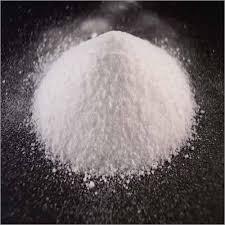
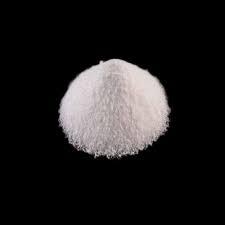
) is a white to gray, hygroscopic solid well known for its use as a powerful Lewis acid and a classic industrial catalyst in organic chemistry. It often appears yellow when contaminated with iron(III) chloride.
Chemical Properties and Structure
Formula:
AlCl
3
AlCl
3
Structure: In solid form, it features a layered, sheet-like structure with octahedral coordination; in the molten or vapor state, it exists as a dimer (
Al
2
Cl
6
Al
2
Cl
6
) with tetrahedral coordination.
Hygroscopic: Strongly attracts water, fuming in moist air and reacting violently with water to produce hydrochloric acid and aluminium hydroxide.
Lewis Acid: Highly effective at accepting electron pairs, making it invaluable for catalyzing a wide range of organic reactions.
Physical Properties
Appearance: White to gray (pure), turns yellow due to impurities.
Odor: Pungent.
Molecular Weight: 133.34 g/mol.
Melting Point: 192–193°C; sublimes at 180°C.
Boiling Point: 180°C (sublimes).
Solubility: Reacts violently with water; dissolves in organic solvents.
Density: 2.48 g/cm³ as a solid.
Uses
Catalyst in Organic Synthesis: Used in Friedel–Crafts alkylation/acylation, polymerization, and isomerization reactions.
Industrial: Used in dyes, pharmaceuticals, and perfumes manufacturing.
Other Uses: Sometimes found in antiperspirants and as a metal surface treatment agent at much lower concentrations.
Handling and Safety
Corrosive: Strongly corrosive to tissue, eyes, and mucous membranes; toxic by ingestion; reacts violently with water and bases.
Storage: Should be stored in tightly sealed containers, protected from moisture.
Special Cautions: After long storage, opening containers can be hazardous due to pressure or decomposition.
Anhydrous aluminium chloride’s reactivity and strong acidity make it essential for many chemical processes, but also require careful handling.