Carbolic Acid (Phenol)
Description
Carbolic acid, also known as phenol, is a simple aromatic compound with the formula C₆H₅OH, consisting of a hydroxyl group directly attached to a benzene ring.
Physical properties
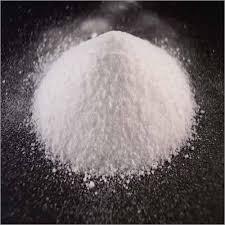
Phenol appears as a white to faint pink crystalline solid with a sweet, tar-like odor; it melts at 40.5°C and boils at 181.7°C, with density around 1.07 g/cm³.
It is moderately soluble in water (8.3 g/100 mL at 20°C) due to hydrogen bonding, highly soluble in alcohols and ethers, and forms a characteristic pink solution in alkalis.
Chemical properties
Phenol is a weak acid (pKa 9.95) stronger than alcohols due to resonance stabilization of the phenoxide ion, reacting with bases and active metals to form phenoxides.
The -OH group activates the ring for electrophilic substitution primarily at ortho and para positions, and phenol undergoes reactions like bromination, nitration, and Reimer-Tiemann formylation.
Main uses
Phenol serves as a key intermediate in producing phenolic resins, plastics (e.g., Bakelite), pharmaceuticals (aspirin, antiseptics), dyes, and explosives; historically used as a disinfectant ('carbolic acid').
Specifications
| Model No. | N-CH1540 |
|---|