Thank you for writing to us. One of our executive will reach back to you through your submitted medium. In case there’s an urgency, feel free to connect over WhatsApp for faster response.
Prefer calling? Dial +918048036175 (International callers) or 08048036175 (Indian callers).
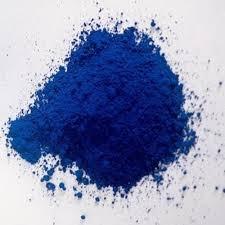
Evans Blue is an azo dye with the molecular formula C34H24N6Na4O14S4 and a molecular weight of approximately 960.8 g/mol. It appears as a dark brown to black powder and forms a blue solution when dissolved in water. Evans Blue dye has high water solubility (around 280 g/L at 20 ºC) and is known for its strong affinity to serum albumin, making it a widely used tracer for blood volume and vascular permeability studies.
Key Properties:
Chemical formula: C34H24N6Na4O14S4
Appearance: Dark brown to black powder
Solubility: Highly soluble in water, slightly soluble in ethanol
Absorption maxima: Around 606-611 nm
Dye content: Typically ≥85%
Color: Blue in solution
Applications:
Used as a biological stain and vascular tracer in biochemical and physiological research
Employed in microscopy and histology as a dye to identify damaged cells and to stain connective tissues
Utilized in medical diagnostics to measure blood volume and vascular integrity
Acts as a fluorochrome in fluorescence microscopy for background autofluorescence suppression
Safety and Handling:
Generally safe in laboratory abundances but should be handled with care to avoid skin or eye contact
Store in a cool, dry place protected from light
This comprehensive profile is suitable for product catalogs, research reagent datasheets, and biochemical supply platforms.
Ethylene Glycol Monoethyl Ether, also known as Ethylene Glycol Mono, is a clear, colorless liquid widely used as an industrial solvent. It has the chemical formula C4H10O2 and is characterized by its mild odor and good miscibility with water and organic solvents.
Key Properties:
Chemical formula: C4H10O2
Appearance: Clear, colorless liquid
Molecular weight: 90.12 g/mol
Boiling point: Approximately 135°C
Solubility: Fully miscible with water and organic solvents
Odor: Mild
Uses:
Serves as an excellent solvent for nitrocellulose, dyes, resins, lacquers, and coatings
Used in hydraulic fluids and as an anti-icing additive in aviation fuels
Acts as a solvent and component in paint strippers, varnish removers, and cleaning agents
Employed in the manufacture of adhesives, sealants, inks, and textile dyes
Used in leather dyeing and processing
Acts as a diluent and stabilizer in various industrial formulations
Benefits:
Provides good solvency for a wide range of compounds, including oils, waxes, and resins
Helps reduce the viscosity of coatings and enhances brushability and leveling in paints
Has a controlled evaporation rate that extends working time during application
Often mixed with other solvents to prevent lacquer film defects like “blushing”
This description is well-suited for industrial chemical catalogs, solvent supplier platforms, and technical data sheets for users in coatings, inks, textiles, and aviation sectors.
Ethylene Glycol Diethyl Ether, also known as 1,2-Diethoxyethane or Diethylene glycol diethyl ether, is a clear, colorless, and hygroscopic liquid with the chemical formula C6H14O2. It belongs to the glycol ether family and is valued for its solvent properties and chemical stability.
Key Properties:
Chemical formula: C6H14O2
Appearance: Clear, colorless liquid
Molecular weight: 118.17 g/mol
Boiling point: Approximately 178-180°C
Solubility: Miscible with water and most organic solvents
Odor: Mild ether-like
Uses:
Widely used as a solvent in paints, coatings, inks, and adhesives
Acts as a coalescent and penetrating solvent in wood stains and floor polishes
Employed in the textile industry for dyeing and printing formulations
Used in the production of pharmaceuticals and cosmetic formulations
Functions as a diluent and stabilizer to improve product performance and drying time in coatings
Seen in polymer chemistry for improved thermal expansion and viscosity control
Safety:
Flammable liquid; handle and store away from sparks and heat sources
Irritant to skin and eyes; use protective equipment during handling
This comprehensive description suits industrial chemical catalogs, solvent suppliers, and technical data sheets serving coatings, printing, textile, and pharmaceutical sectors.
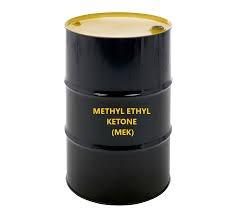
Ethyl Methyl Ketone, also known as Butan-2-one or Methyl Ethyl Ketone (MEK), is a colorless, volatile liquid with a sharp, sweet odor. It has the chemical formula C4H8O and is a key industrial solvent widely used due to its excellent solvency and evaporation characteristics.
Key Properties:
Chemical formula: C4H8O
Molecular weight: 72.11 g/mol
Boiling point: About 79.6°C
Appearance: Colorless liquid with a sweet, sharp odor
Solubility: Miscible with most organic solvents; moderately soluble in water
Purity: Purified grades ensure minimal impurities for consistent performance
Uses:
Solvent for paints, coatings, adhesives, and inks
Used in plastics and synthetic rubber manufacturing
Degreasing agent for metals in industrial cleaning
Intermediate in chemical synthesis, including pharmaceuticals and agrochemicals
Utilized in the production of textiles and leather products
Component in cleaning agents and nail polish removers
Plays a role as an extraction solvent and in azeotropic distillation processes
Benefits:
Strong solvency coupled with relatively low toxicity compared to similar solvents
Higher boiling point than acetone, offering longer working time
Facilitates efficient evaporation and drying in coatings and adhesives
Compatible with a wide variety of resins and polymers
This detailed description is suitable for industrial chemical catalogs, safety data sheets, and supplier product information targeting chemical manufacturers, industrial users, and research labs requiring purified methyl ethyl ketone.
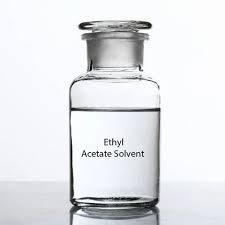
Ethyl Acetate Purified is a colorless, volatile liquid with a characteristic sweet, fruity odor. It is an ester formed from acetic acid and ethanol, widely used as an industrial solvent owing to its excellent solvency and rapid evaporation rate.
Key Properties:
Chemical formula: C4H8O2 (CH3COOC2H5)
Molecular weight: 88.11 g/mol
Boiling point: Approximately 77°C
Appearance: Clear, colorless liquid
Solubility: Miscible with most organic solvents; moderately soluble in water
Uses:
Commonly used as a solvent in paints, coatings, varnishes, adhesives, and printing inks
Employed in the pharmaceutical industry for extraction and purification of drugs
Used as a flavoring agent in the food industry due to its fruity aroma
Utilized in decaffeination of coffee and tea as a solvent
Acts as an extraction solvent for essential oils and other natural products
Used in cosmetic formulations like nail polish removers and perfumes
Important in adhesives and sealants to dissolve resin components and control viscosity
Benefits:
Low cost, low toxicity, and environmentally friendly profile
Good evaporation rate suited for coatings and cleaning applications
Compatible with various substances and effective as a diluent and solvent
This description is suitable for product data sheets, chemical catalogs, and supplier listings for purified ethyl acetate in industrial, pharmaceutical, cosmetic, and food-grade applications.
Diethyl Ether (Ether Solvent Extra Pure) is a colorless, highly volatile, and highly flammable organic compound with the formula (C2H5)2O. It has a characteristic sweet, ether-like odor and is widely used as a solvent and historically as a general anesthetic.
Key Properties:
Chemical formula: (C2H5)2O
Molecular weight: 74.12 g/mol
Boiling point: 34.6°C
Appearance: Clear, colorless liquid
Solubility: Slightly soluble in water (about 6 g/100 mL at 25°C); miscible with most organic solvents
Odor: Characteristic ether-like sweet smell
Uses:
Common solvent in organic synthesis, particularly for Grignard and other organometallic reactions due to its aprotic character
Useful for liquid-liquid extraction and purification processes in labs and industry
Historically used as a general anesthetic (replaced in modern medicine)
Used as a fuel additive and starting fluid for engines requiring rapid ignition
Employed in pharmaceutical, cosmetic, and paint industries as a solvent for gums, resins, oils, and waxes
It acts as a refrigerant in low-temperature cooling applications when mixed with dry ice
Handling and Safety:
Highly flammable and may form explosive peroxides if stored improperly
Usually supplied with stabilizers like BHT to inhibit peroxide formation
Should be stored in tightly sealed containers away from heat, light, and air exposure
Use appropriate PPE when handling due to skin and respiratory irritation hazards
This description suits industrial and laboratory chemical catalogs, safety datasheets, and technical documentation for high-purity diethyl ether solvent needs.
Ethanolamine is a colorless, viscous liquid organic compound that has both a primary amine and a primary alcohol group in its structure, making it bifunctional and chemically versatile. Its chemical formula is C₂H₇NO (NH₂CH₂CH₂OH), and it features an ammonia-like odor.
Chemical and Physical Properties
Ethanolamine is completely miscible with water, alcohol, and ether.
It is alkaline and acts as a base, making it useful as a pH regulator in various products.
The compound is moderately toxic if ingested in large amounts and can cause irritation upon contact with skin or eyes.
Boiling point: 338°F (170°C); molecular weight: 61.08.
Biological and Industrial Uses
Ethanolamine is a key ingredient in many industrial processes as a surfactant, emulsifier, and corrosion inhibitor.
It is used to remove CO₂ and H₂S from natural gas and other gases in gas treatment plants.
In biochemistry, ethanolamine is a building block of phospholipids such as phosphatidylethanolamine, which are critical components of cell membranes.
It is also employed in cosmetics and cleaning products for its ability to stabilize emulsions and regulate pH.
Biological Function and Pathways
Ethanolamine is widely distributed in biological tissues and is a natural breakdown product of certain phospholipids.
It can be metabolized by the enzyme ethanolamine ammonia-lyase to form acetaldehyde and ammonia.
Ethanolamine derivatives are involved in biosynthetic pathways for molecules like phosphatidylcholine in cells.
Ethanolamine’s versatile reactivity and biological relevance make it important in both laboratory and industrial contexts.
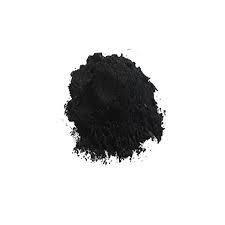
Eriochrome Black T is a dark purple-brown or black azo dye commonly used as a complexometric indicator in analytical chemistry, especially to determine water hardness via EDTA titration.
Chemical Properties
Molecular formula: C₆₀H₁₂N₃O₇SNa
Molar mass: 461.38 g/mol
Appears as a dark red-brown or black powder; odorless.
Soluble in water (5 g/100 ml at 20°C) but nearly insoluble in most organic solvents including ethanol.
pKa values: ~6.2 and 11.55 (for acid dissociation).
Indicator Function
In EDTA titration, Eriochrome Black T binds metal ions such as Ca²⁺ and Mg²⁺, turning red when complexed.
When all metal ions are chelated by EDTA, the indicator reverts to its unbound blue form, marking the titration endpoint.
It’s also used to detect rare earth metals and can serve in test paper preparation for calcium detection.
Safety and Storage
Irritant but not considered highly toxic or carcinogenic; ingestion may cause diarrhea.
Store in closed amber bottles, away from light and corrosive vapors to preserve stability.
Eriochrome Black T is fundamental in water quality assessment and general complexometric analysis due to its distinct color change and reliable sensitivity to metal ions.
Eriochrome Black T is a dark purple-brown or black azo dye commonly used as a complexometric indicator in analytical chemistry, especially to determine water hardness via EDTA titration.
Chemical Properties
Molecular formula: C₆₀H₁₂N₃O₇SNa
Molar mass: 461.38 g/mol
Appears as a dark red-brown or black powder; odorless.
Soluble in water (5 g/100 ml at 20°C) but nearly insoluble in most organic solvents including ethanol.
pKa values: ~6.2 and 11.55 (for acid dissociation).
Indicator Function
In EDTA titration, Eriochrome Black T binds metal ions such as Ca²⁺ and Mg²⁺, turning red when complexed.
When all metal ions are chelated by EDTA, the indicator reverts to its unbound blue form, marking the titration endpoint.
It’s also used to detect rare earth metals and can serve in test paper preparation for calcium detection.
Safety and Storage
Irritant but not considered highly toxic or carcinogenic; ingestion may cause diarrhea.
Store in closed amber bottles, away from light and corrosive vapors to preserve stability.
Eriochrome Black T is fundamental in water quality assessment and general complexometric analysis due to its distinct color change and reliable sensitivity to metal ions.
A 2% w/v eosin yellow solution is commonly used as a biological stain in microscopy, especially for monochrome staining of microbial smears and as a counterstain in hematoxylin and eosin (H&E) staining protocols.
Preparation
Dissolve 2 g of Eosin Y dye in 100 ml of distilled water to make a 2% w/v solution.
The resulting solution is orange-red, miscible with water and alcohol, and exhibits yellowish-green fluorescence.
Optionally, a small amount of glacial acetic acid may be added to intensify staining, but for standard use, water alone suffices.
Application
Flood the fixed smear with eosin yellow 2% solution for 2–3 minutes or briefly heat for less than 30 seconds.
Wash the slide in slow-running water, blot dry, and examine under a microscope using oil immersion.
This solution is suitable for standard microscopic staining and produces strong cytoplasmic coloration in tissue or microbial specimens.
Eosin Water Soluble (yellow shade) for microscopy staining (M.S.) is a commonly used dye for differential staining of cell cytoplasm, connective tissue, and muscle fibers.
Key Properties
Synonyms: Eosin Y, Acid Red 87, C.I. 45380
Chemical formula: C₂₀H₆Br₄Na₂O₅; CAS No: 17372-87-1
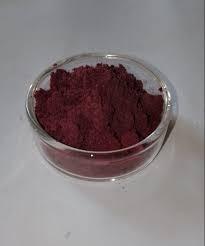
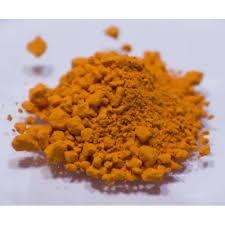
Appearance: Brownish red fine powder; water soluble
Absorption maxima: 515–520 nm (in water)
Dye content: Minimum 85–90% (as microscopy-grade)
Usage in Microscopy
Utilized for staining cytoplasm in tissue sections; produces a yellow-orange coloration for enhanced cell visibility under the microscope.
Suitable for use in both single or counterstaining procedures, especially paired with hematoxylin for H&E (haematoxylin and eosin) stains.
Offered as a powder for solution preparation or as a ready-made water-soluble stain for convenience.
This eosin grade meets standard requirements for biological and medical microscopy stains, providing clear cytoplasmic contrast for cell structure examination.
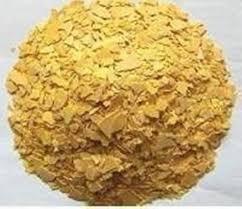
Egg albumen flakes are dehydrated forms of egg white, processed for laboratory and industrial use. They are valued for their high protein purity, ease of solubility, and stability for applications like electrophoresis, cell culture media, and microscopy.
Preparation and Properties
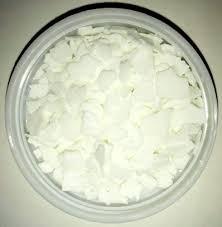
Sourced from pasteurized, separated egg whites that are dried and ground into flakes or powder.
The flakes dissolve readily in water, forming clear solutions suitable for biological adhesives or protein analysis.
Commercial flakes are typically additive-free, offering reliable results in scientific experiments.
Laboratory Usage
Egg albumen flakes are optimal for preparing adhesive solutions for microscopy, slide mounting, or as protein standards in analytical tests.
For microscopy, the albumen can be rehydrated and spread onto slides or used to prepare colloidal solutions for demonstration and practical experiments.
Quality control involves drying the albumen, grinding, passing through fine sieves, and packing in sealed containers.
Egg albumen flakes provide a convenient and reproducible source of protein for diverse laboratory, educational, and research applications.