

Description
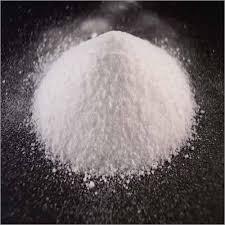
Cuprous chloride extra pure is typically supplied as high-purity copper(I) chloride (CuCl) with assay around 96–97% or higher, in the form of a greyish white to light green crystalline powder that may slowly turn greenish or brown on exposure to air and light.
Identity and composition
Chemical name: Cuprous chloride; Copper(I) chloride.
Molecular formula: CuCl; molecular weight about 99.0 g/mol.
Typical grade specification: Extra pure/Extrapure with minimum assay 96–97% CuCl, with tight limits on impurities such as sulphate, iron, and arsenic (e.g., sulfate ≤0.05%, Fe ≤0.01%, As ≤0.0002%).
Physical properties
Appearance: Greyish white to light green crystalline powder; can become greenish on exposure to air and brownish on prolonged light exposure.
State: Solid at room temperature; odorless.
Density: About 4.14 g/cm³.
Melting point: Around 430 °C; boiling point around 1490 °C.
Solubility: Sparingly soluble in water (about 0.6 g per 100 mL); soluble in concentrated hydrochloric acid and in some complexing media such as ammonium hydroxide.
pH: A suspension (e.g., 50 g/L) in water shows slightly acidic pH around 5 at 20 °C.
Typical uses
Extra pure cuprous chloride is used where relatively low impurity levels are important, for example:
As a reagent in inorganic and coordination chemistry and in analytical applications.
In organic synthesis and catalytic systems involving copper(I) species (e.g., as a source of Cu(I) in coupling or addition reactions).
In specialized industrial processes (e.g., as an absorbent for carbon monoxide in gas purification systems), often when a high-purity grade is preferred to minimize contamination.
Handling and safety (brief)
Hazard classification: Commonly labeled with hazard statements indicating harmful if swallowed and very toxic to aquatic life (e.g., H302, H410) and pictograms GHS07 and GHS09 with signal word “Warning.”
Key precautions: Avoid ingestion and inhalation of dust; prevent release to the environment; store in tightly closed containers away from light and moisture to limit oxidation to cupric species.
For catalog use, a concise description could read along the lines of: “Cuprous chloride, extra pure, CuCl, assay min. 97%, greyish white crystalline powder, slightly water-soluble, mp ~430 °C, for laboratory and synthesis use; harmful if swallowed and very toxic to aquatic life.”