
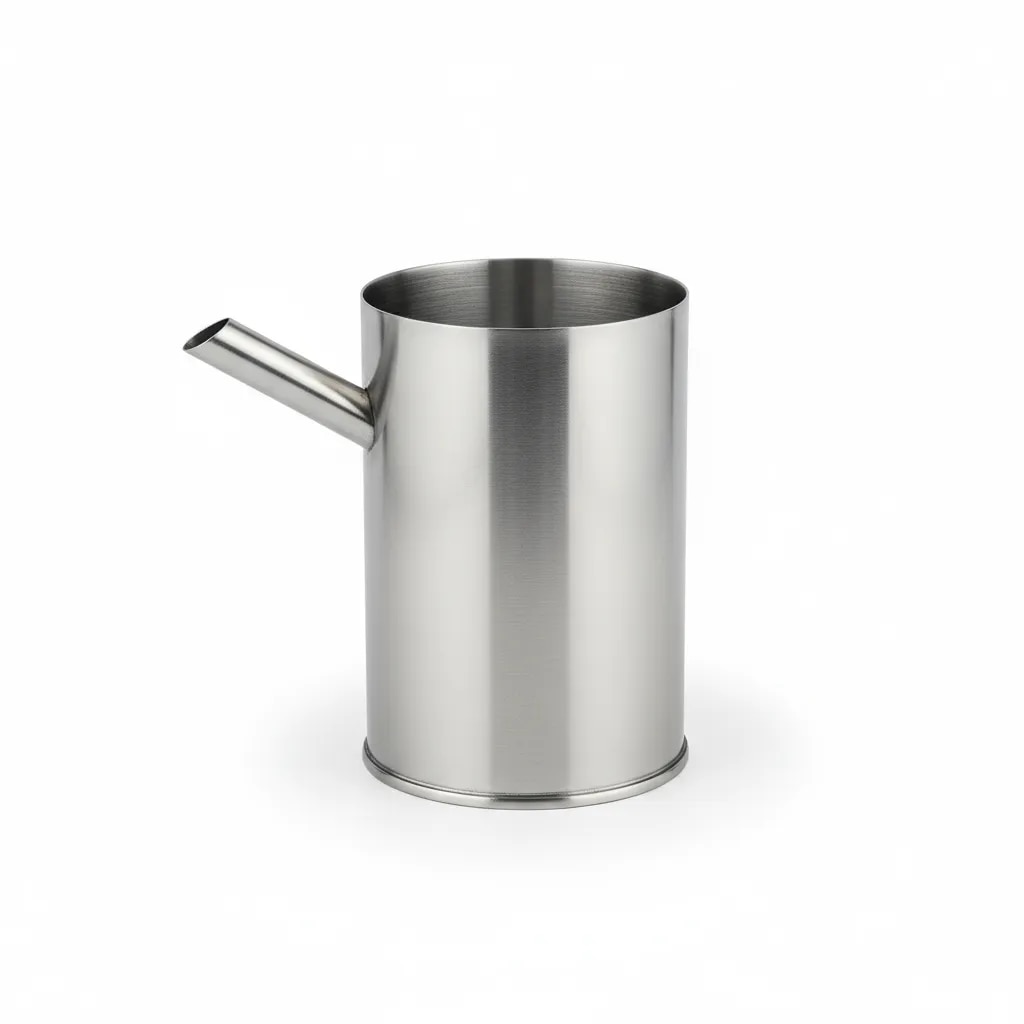
Eureka Can (Overflow Cans), Metal
Description
Eureka Can (Overflow Can) - Metal Description:
The Eureka Can, also known as an Overflow Vessel or Overflow Can, is an essential laboratory instrument used primarily in physics experiments, notably in Archimedes' principle demonstrations.
It is usually fabricated from galvanized iron (G.I) sheet with a hammer-tone finish for durability and aesthetic appeal.
The can's top edge is flared to provide extra strength and resistance to deformation.
It features a side spout or outlet to allow water or other liquids to overflow and drain out when an object is submerged, enabling the measurement of displaced fluid volume.
These cans are used for measuring the volume of irregularly shaped objects by fluid displacement.
Available in different metals upon request, the metal variety ensures robustness and long-term use in laboratory environments.
Typical applications include physics labs, educational demonstrations, and experimental setups involving liquid displacement.
The image generated shows a classic style metal Eureka Can, cylindrical with a pouring spout, designed for overflow displacement experiments(see the generated image above).
Related
What are the different types of overflow vessels used in laboratories
How does the material of a Eureka Can affect its performance
What are the common applications of overflow vessels in experiments
How to select the right overflow vessel for specific laboratory needs
What maintenance tips ensure the longevity of laboratory overflow vessels