

Thank you for writing to us. One of our executive will reach back to you through your submitted medium. In case there’s an urgency, feel free to connect over WhatsApp for faster response.
Prefer calling? Dial +918048036175 (International callers) or 08048036175 (Indian callers).
The measurement of susceptibility of a paramagnetic solution by Quinck’s tube method involves determining how easily a solution becomes magnetized when exposed to a magnetic field, using a special U-shaped tube apparatus.
Principle and Setup
Quinck’s tube method is based on the force experienced by a magnetized liquid in a non-uniform magnetic field. The apparatus consists of a U-shaped Quincke's tube with one narrow and one wide limb. The paramagnetic solution is filled into the tube, which is then placed so that the narrow limb sits between the poles of an electromagnet. The magnetic field strength is measured using a digital Gauss meter, and the rise in liquid level in the narrow limb is measured with a traveling microscope when the magnetic field is applied.
Procedure
When the paramagnetic liquid in the narrow limb is exposed to the magnetic field, it rises due to the induced magnetic moment. The height difference (
h
h) between the two liquid levels (before and after applying the field) is recorded. This change corresponds to the force exerted by the magnetic field and is proportional to the material’s susceptibility.
Calculation of Susceptibility
The magnetic susceptibility (
χ
χ) can be calculated using the following formula:
χ
=
2
(
ρ
−
σ
)
g
h
H
2
χ=
H
2
2(ρ−σ)gh
where
ρ
ρ = density of liquid or solution
σ
σ = density of air
g
g = acceleration due to gravity
h
h = height difference observed in the narrow limb
H
H = applied magnetic field intensity.
The susceptibility indicates how much the solution is magnetized under the applied field, and plotting
h
h versus
H
2
H
2
(or field squared) allows direct determination from the slope.
Applications
This method is commonly used for measuring the susceptibility of paramagnetic solutions such as manganese sulfate in educational and research laboratories.
This description provides the essential principles, apparatus, procedure, and formula associated with the Quinck's tube method for measuring the susceptibility of paramagnetic solutions.
Welcome to the world of MNC Modular Laboratory Furniture! Our top-of-the-line modular laboratory furniture is designed to meet all your laboratory needs with ease and efficiency. Made with high-quality materials, our furniture is not only durable but also customizable to suit your specific requirements. With its sleek and modern design, it will give your lab a professional look while maximizing space utilization. Our modular furniture allows for easy installation and reconfiguration, making it perfect for any type of laboratory setting. Say goodbye to cluttered workspaces and hello to a well-organized and functional lab with MNC Modular Laboratory Furniture. Upgrade your lab today and experience the convenience and versatility of our top-notch modular furniture!
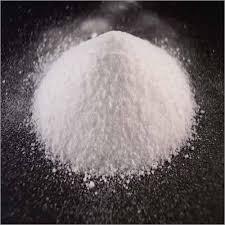
Ferrous borate extra pure is a high-quality iron(II) borate compound (commonly referred to as iron(II) borate or ferrous borate), used predominantly in laboratory and industrial settings for applications that demand high purity standards. It typically appears as a fine, air-sensitive solid and is valued for its chemical stability under controlled conditions. The compound features a high degree of purity, making it especially suitable for analytical work, advanced research, and select industrial processes.
Product Description for Website
Ferrous borate extra pure (Iron(II) borate) is a premium-grade inorganic salt prepared to strict purity standards, ensuring low levels of contaminants and accurate stoichiometry for scientific and technical applications. The product is carefully processed and packaged to maintain its chemical integrity and support reliable results in laboratory analysis and synthesis.
Synonyms: Iron(II) borate, Ferrous borate
Chemical Formula: Fe(BO2)2 (hydrated forms and other stoichiometries possible)
Appearance: Pale solid, may be air-sensitive
Grade: Extra pure (analytical/research grade)
Applications: Used in specialized laboratory analyses, catalyst systems, advanced inorganic synthesis, and as a starting material in certain industrial applications where high purity is critical.
Key Features
High purity and controlled chemical analysis for reliable, reproducible results
Packaged with minimal contamination risk and maximum shelf-life
Suitable for use in chemical research, formulation, and manufacturing at the analytical level
Safety & Handling
Ferrous borate is generally stable under typical laboratory conditions but should be handled with care as it may be sensitive to atmospheric moisture and air. Use standard personal protective equipment and store in a tightly sealed container in a cool, dry environment.
This concise description is suitable for use as a base product summary or catalog entry for e-commerce or laboratory supply websites, ensuring clarity for research and procurement professionals.
Ferrous borate extra pure is a high-quality iron(II) borate compound (commonly referred to as iron(II) borate or ferrous borate), used predominantly in laboratory and industrial settings for applications that demand high purity standards. It typically appears as a fine, air-sensitive solid and is valued for its chemical stability under controlled conditions. The compound features a high degree of purity, making it especially suitable for analytical work, advanced research, and select industrial processes.
Product Description for Website
Ferrous borate extra pure (Iron(II) borate) is a premium-grade inorganic salt prepared to strict purity standards, ensuring low levels of contaminants and accurate stoichiometry for scientific and technical applications. The product is carefully processed and packaged to maintain its chemical integrity and support reliable results in laboratory analysis and synthesis.
Synonyms: Iron(II) borate, Ferrous borate
Chemical Formula: Fe(BO2)2 (hydrated forms and other stoichiometries possible)
Appearance: Pale solid, may be air-sensitive
Grade: Extra pure (analytical/research grade)
Applications: Used in specialized laboratory analyses, catalyst systems, advanced inorganic synthesis, and as a starting material in certain industrial applications where high purity is critical.
Key Features
High purity and controlled chemical analysis for reliable, reproducible results
Packaged with minimal contamination risk and maximum shelf-life
Suitable for use in chemical research, formulation, and manufacturing at the analytical level
Safety & Handling
Ferrous borate is generally stable under typical laboratory conditions but should be handled with care as it may be sensitive to atmospheric moisture and air. Use standard personal protective equipment and store in a tightly sealed container in a cool, dry environment.
This concise description is suitable for use as a base product summary or catalog entry for e-commerce or laboratory supply websites, ensuring clarity for research and procurement professionals.