
Description
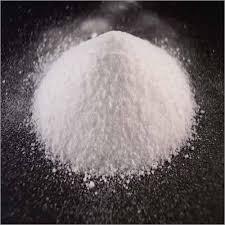
The “Mfg. of Sodium Hydrogen Carbonate” (55x90 cm) educational chart typically illustrates the industrial (Solvay) process for producing sodium hydrogen carbonate (baking soda, NaHCO₃), providing clear diagrams and concise explanations for chemistry classrooms and laboratories.
Chart Features
Large, laminated multicolor chart (55x90 cm) for classroom visibility and durability.
Depicts the Solvay process, which is the main industrial method for manufacturing sodium hydrogen carbonate:
Shows major raw materials: sodium chloride (NaCl, brine), ammonia (NH₃), water (H₂O), and carbon dioxide (CO₂).
Illustrates the carbonating tower, where ammonia and CO₂ are bubbled through brine, leading to precipitation of sodium hydrogen carbonate.
Describes the cooling, filtration, and drying steps used to separate pure sodium hydrogen carbonate.
Key reactions usually illustrated on the chart:
Formation of ammonium bicarbonate:
N
H
3
+
C
O
2
+
H
2
O
→
N
H
4
H
C
O
3
NH
3
+CO
2
+H
2
O→NH
4
HCO
3
Formation of sodium hydrogen carbonate:
N
H
4
H
C
O
3
+
N
a
C
l
→
N
a
H
C
O
3
↓
+
N
H
4
C
l
NH
4
HCO
3
+NaCl→NaHCO
3
↓+NH
4
Cl
Separation and recovery of ammonia from ammonium chloride, which is recycled in the process.
May include a summary of applications (antacids, baking, fire extinguishers, cleaning agents) and chemical properties.
Educational Value
Visually explains the industrial production process, component flow, and recycling of key chemicals.
Supports chemistry education at secondary and college level, connecting process chemistry to real-world products.
Facilitates understanding of the economic and environmental significance of the Solvay process, including recycling and by-product management.
This chart is a valuable tool for teaching core principles of industrial and inorganic chemistry through engaging visuals and stepwise explanations.