
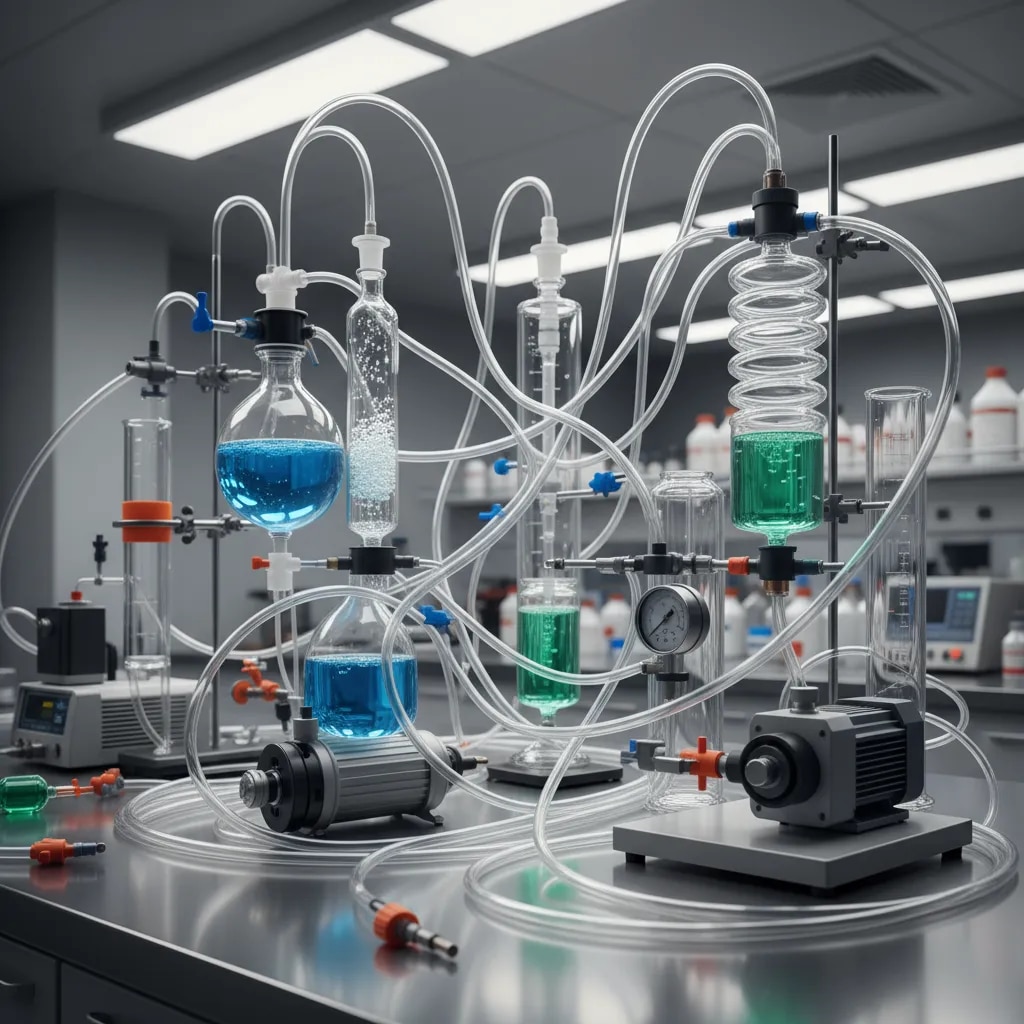
TUBING
Description
Materials: Tubing can be made from materials like rubber, silicone, PVC, glass, PTFE, and specialized plastics. The choice depends on chemical compatibility, temperature resistance, and flexibility needs.
Applications: It is used for connecting glassware, conducting chemical or biological fluids, vacuum lines, gas lines, and for peristaltic pumps in analytical instruments.
Shapes and Sizes: Most tubes have a circular cross-section but square, oval, or rectangular shapes exist for specialized needs. Standard sizes vary typically by outside diameter (OD) such as 1/4“, 3/8”, 1/2" for general lab use.
Performance Specifications:
Pressure Rating: Maximum pressure the tubing can withstand, measured in psi.
Vacuum Resistance: The maximum vacuum pressure the tube can tolerate.
Minimum Bend Radius: The smallest curve the tubing can be bent without damage.
Temperature Range: Operational temperature limits for the tubing.
Special Types: Vacuum tubing, reinforced tubing, silicone tubing, and thermoplastic elastomer tubing are common for specialized tasks such as vacuum applications, resistance to harsh chemicals, or flexibility.
Advantages: Tubing ensures safe and clean transfer of liquids and gases, reduces contamination risk, and facilitates complex laboratory setups