
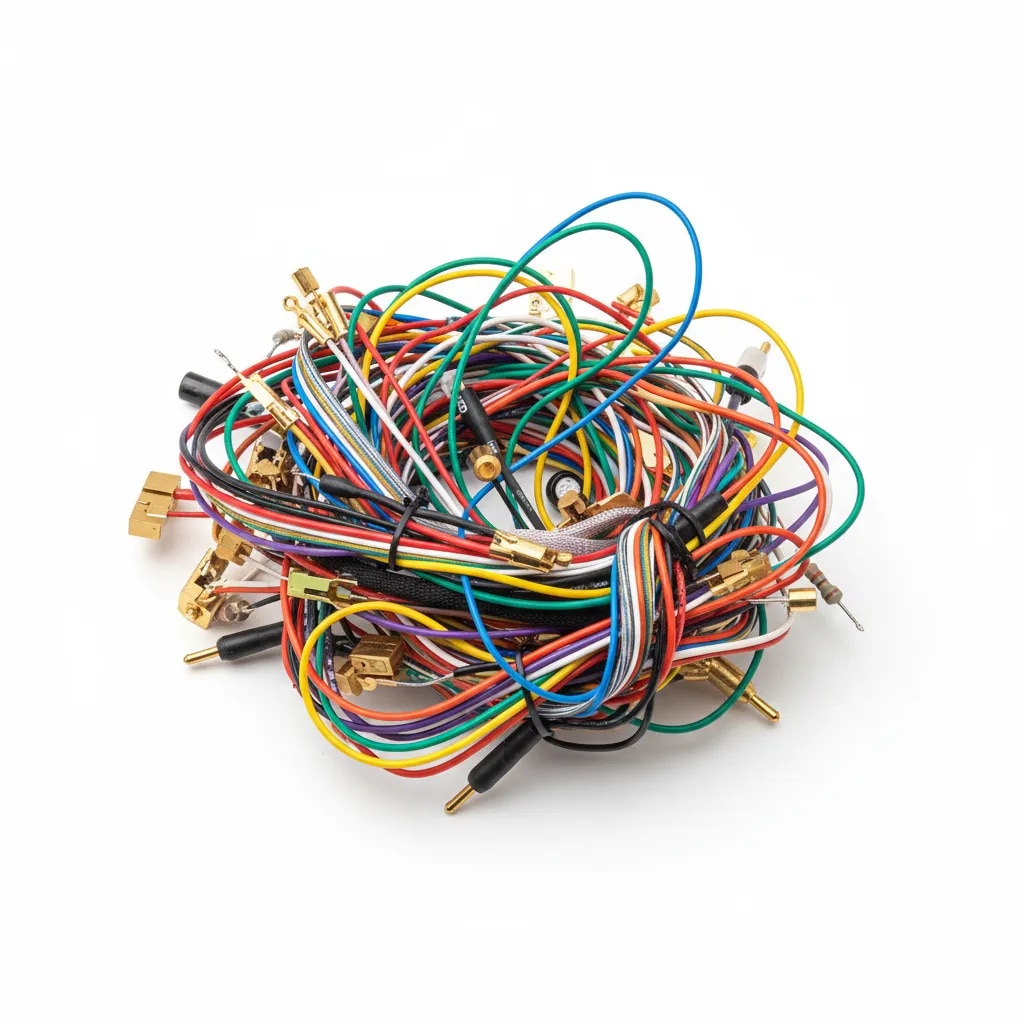
WIRES
Description
Laboratory wires are versatile and essential components used for various scientific and experimental applications, connecting electrical circuits, instruments, and devices within laboratory setups. These wires are available in different materials such as copper, stainless steel, platinum, and specialty alloys, providing reliable conductivity and durability demanded for precise experimental results.
Key Features
Made from high-quality conductive metals such as copper, platinum, or stainless steel for optimal current transfer and corrosion resistance.
Available in various diameters and lengths suitable for diverse lab uses, including apparatus wiring, test connections, and instrument setup.
Designed to ensure flexibility, easy handling, and installation in both educational and professional laboratory environments.
Suit different applications such as electrode connections, circuit prototyping, signal testing, and general-purpose connections in physics and electronics labs.
Specialty options are offered for specific research applications, including high-temperature, low-resistance, or insulated wire varieties.
Applications
Used in electrical and electronics experiments, power supply connections, and circuit assembly.
Suitable for connecting scientific instruments and measurement devices in laboratory settings.
Commonly used for educational demonstrations, research projects, and equipment repairs or assembly in academic and industrial labs.
These wires are an indispensable laboratory accessory, chosen for their consistent performance, safety features, and compatibility with a range of scientific equipment.
LABORATORTY STANDS Primary image* (Jpeg, 800x800px) less than 2mb
LABORATORTY STANDS Primary image* (Jpeg, 800x800px) less than 2mb
Primary image of laboratory stand for e-commerce
DISCRIPTION
DISCRIPTION
Laboratory stands, often referred to as retort stands, clamp stands, or ring stands, are essential pieces of scientific equipment designed to securely support and stabilize various laboratory apparatus during experimental procedures. They typically feature a heavy, durable base and a vertical rod, constructed from corrosion-resistant metal, which allows for attachment of clamps, rings, and other accessories at adjustable heights according to experiment requirements.
Key Features
Made with a strong metal base and upright rod for superior stability and long-term use in laboratory environments.
Versatile support system for glassware and scientific equipment such as burettes, test tubes, flasks, and funnels, preventing accidents and ensuring precision during heating or mixing.
Accessories like clamps, iron rings, and boss heads can be added to customize setups according to the experiment's needs.
Adjustable height and position make them suitable for a range of experimental setups from filtration to distillation.
Applications
Used for supporting and suspending laboratory glassware and equipment during heating, mixing, distillation, or filtration processes.
Essential for maintaining safety and organization in both educational and professional lab environments, minimizing the risk of spills, breakage, or accidents.
Commonly found in chemistry, physics, and biology labs, aiding in a variety of experimental functions from titrations to chemical reactions.
Investing in high-quality laboratory stands enhances workflow efficiency and safety, making them indispensable tools for scientific research and experimentation.
Related
Do you mean “description” and want a lab stand description
Write a short product description for a retort stand for beginners
Provide a 50-word product blurb for a laboratory clamp stand
Give a technical description listing parts and materials of a lab stand
Create a safety-focused description for using a ring/retort stand
Source
Copper Wire- Enameled SWG 32, Roll of 75 grams