
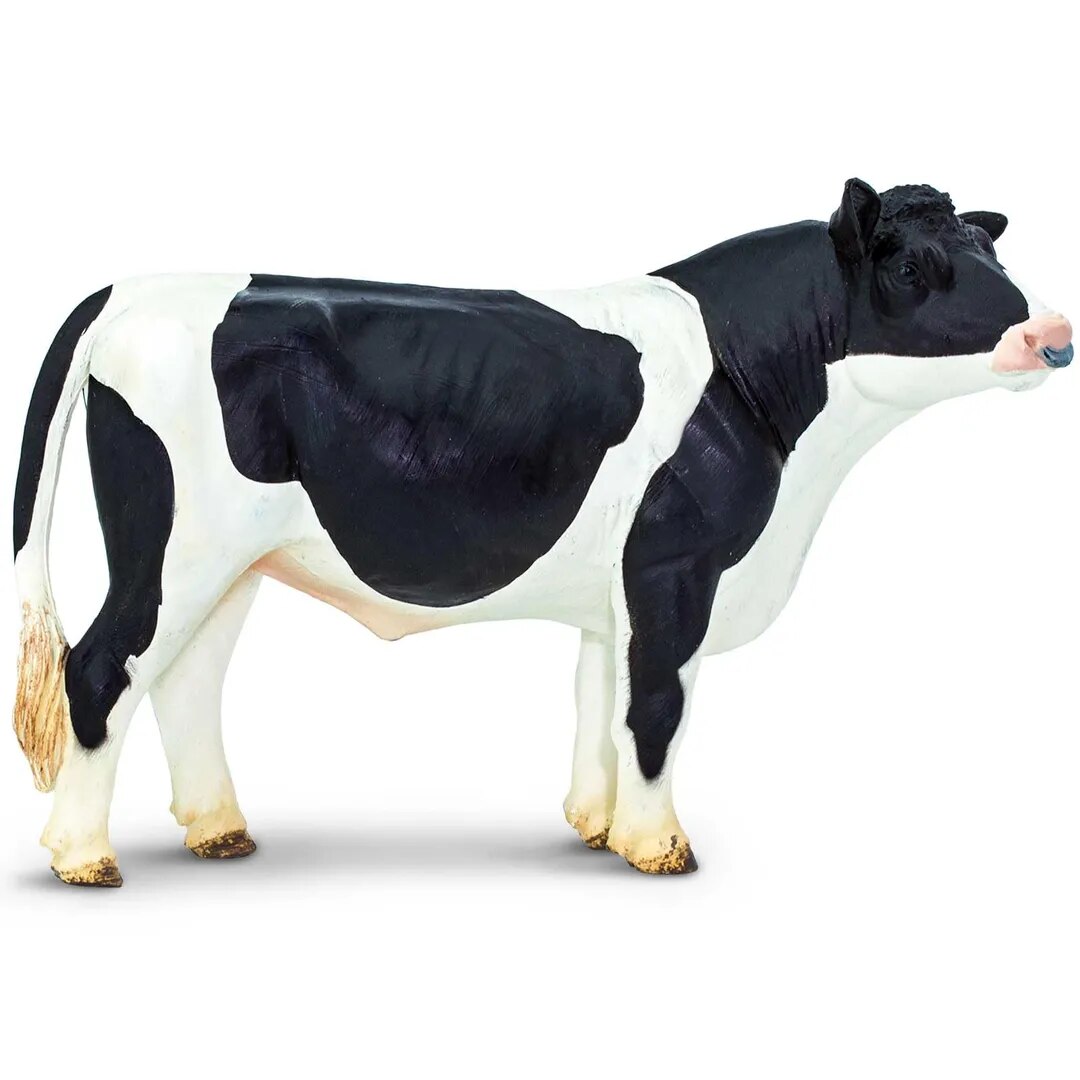
1.Holestetin
Description
Holstein (sometimes written “Holestetin” or “Holstein-Friesian”) is a world-famous dairy cattle breed recognized for its distinctive black-and-white or sometimes red-and-white coat, large size, and outstanding milk production capabilities.
Key Features
Holstein cows typically weigh about 1,500–1,600 pounds (680–725 kg) and stand 58–65 inches (145–165 cm) at the shoulder.
Calves are robust, usually weighing 40–50 kg (88–110 lb) at birth.
They have sharply defined, piebald (patchwork) patterns unique to each animal, most often in black and white; some variants are red and white due to a recessive gene.
Holsteins are renowned for prolific milk production, averaging 22,530 to 28,000 pounds (10,220–12,700 kg) of milk per cow per year.
Their milk contains about 3.7% butterfat and 3.1% protein per year, favoring fluid milk but producing less butterfat and protein compared to other dairy breeds.
They are adaptable, docile, and favored for their ease of calving and management.
Historical Origin
The Holstein breed originated in northern Europe, especially the Netherlands, over 2,000 years ago through crossbreeding black Batavian cattle and white Friesian cattle.
Selective breeding for high dairy yield and efficient use of grass made them the dominant dairy breed worldwide.
Holsteins are the leading dairy cattle in international milk production, known for their productivity, adaptability, and ease of handling, making them a staple on modern dairy farms.
Specifications
| Model No. | N-EM0110 |
|---|


