
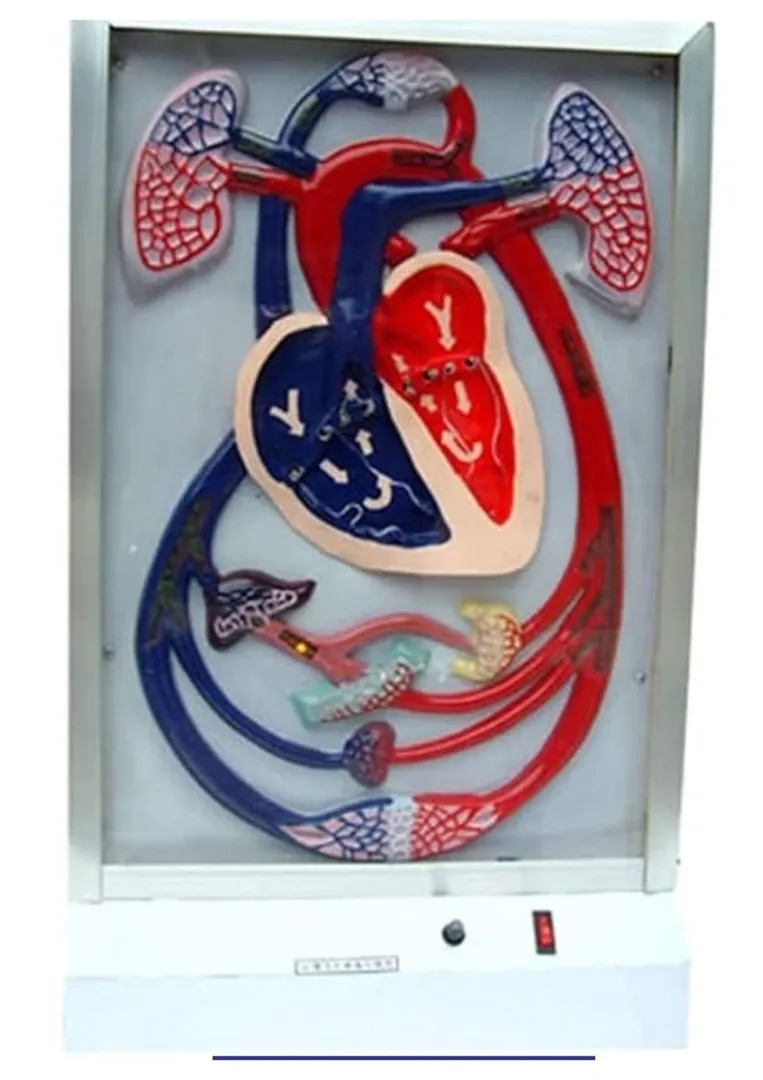
Cardiac Beat and Blood Circulation Model
Description
A Cardiac Beat and Blood Circulation Model is a laboratory apparatus designed to visually demonstrate the beating of the human heart and the flow of blood through the circulatory system. This model is widely used in classrooms and educational settings to aid the understanding of heart anatomy, the cardiac cycle, and blood circulation patterns.
Features of the Cardiac Beat and Blood Circulation Model
The model typically features an enlarged section of the human heart, constructed with flexible materials that realistically replicate the heart's walls.
Mechanical or electrical actuation allows the model to simulate heartbeats, giving a visual cue of contraction and relaxation phases.
The model is often mounted with clear tubing or colored pathways representing arteries and veins for tracing the path of blood flow through the heart, lungs, and body.
Educational Applications
The model demonstrates the cardiac cycle, including atrial and ventricular contractions and the route of oxygenated and deoxygenated blood.
Flashing lights or moving fluid may be included to represent the rhythmic flow of blood in response to heartbeats.
It's used to explain systemic and pulmonary circulation, the working of valves, gas exchange in the lungs, and the “double pump” feature of the heart.
Typical Components
Specifications
| Model No. | N-EM0161 |
|---|


