Thank you for writing to us. One of our executive will reach back to you through your submitted medium. In case there’s an urgency, feel free to connect over WhatsApp for faster response.
Prefer calling? Dial +918048036175 (International callers) or 08048036175 (Indian callers).
Canada balsam for microscopy is a natural oleoresin from the balsam fir tree (Abies balsamea), used as a permanent mounting medium for microscope slides due to its refractive index (n=1.52–1.53) matching glass.
Composition and properties
It is a viscous, pale yellow to colorless liquid (often supplied in xylene or solvent) that dries to a transparent, amorphous solid with excellent optical clarity, low birefringence, and stability for long-term specimen preservation.
Preparation and use
Specimens are dehydrated (e.g., with xylene), a drop of Canada balsam is placed on the slide, and a coverslip is applied; it requires 1–2 weeks to fully harden at room temperature, sealing samples from air and moisture.
Advantages over synthetics
Traditional choice for histology, cytology, and geology thin sections due to durability (slides last centuries); modern synthetic media are faster-drying but Canada balsam remains preferred for high-end, archival preparations.
Camphor oil synthetic is a laboratory-grade, artificially produced version of camphor essential oil, typically a clear, colorless to pale yellow liquid with a strong, penetrating camphoraceous odor, used primarily as a mounting or clearing medium in microscopy.
Composition and properties
It consists mainly of synthetic camphor (borneone, C₁₀H₁₆O) dissolved in a neutral solvent like toluene or xylene, with a refractive index of about 1.46–1.50, low viscosity, and volatility that allows tissues to clear without shrinkage.
Microscopy uses
Synthetic camphor oil serves as a temporary mounting medium for fresh or wet preparations, a clearing agent before permanent mounting (e.g., with Canada balsam), or an immersion oil alternative; it renders tissues transparent by dehydrating and matching refractive indices.
Advantages
Unlike natural camphor oil (from Cinnamomum camphora), the synthetic version is purer, more consistent, free of impurities or allergens, and safer for prolonged lab use without crystallizing or discoloring slides.
Camphor is a white, waxy, crystalline solid (C₁₀H₁₆O) with a strong, penetrating odor, obtained naturally from the wood of the camphor tree (Cinnamomum camphora) or produced synthetically from turpentine via oxidation of pinene.
Properties
It sublimes readily at room temperature (sublimation point 204°C, melting point 175°C), is volatile, soluble in alcohol and ether but sparingly in water, and exhibits a characteristic camphoraceous scent due to its bicyclic monoterpene ketone structure.
Microscopy role
In microscopy, synthetic camphor oil (camphor dissolved in solvents like toluene) serves as a temporary mounting or clearing medium with refractive index ~1.48, making tissues translucent for viewing without permanent embedding.
Main uses
Camphor is used medicinally as a topical rubefacient and antipruritic, in plastics and explosives as a plasticizer, and historically as an insect repellent; synthetic grades ensure purity for lab, pharmaceutical, and industrial applications.
Calcium triphosphate, commonly known as tricalcium phosphate (TCP, Ca₃(PO₄)₂), is a white, odorless, tasteless calcium salt of phosphoric acid used as a food additive, nutritional supplement, and biomaterial.
Composition and forms
It exists primarily as β-tricalcium phosphate (stable at room temperature, rhombohedral structure) or high-temperature polymorphs α- and α'-TCP; commercial samples are often hydroxyapatite (Ca₅(PO₄)₃OH) or biphasic mixtures, with low solubility in water (≤20 mg/L).
Properties
TCP has a high melting point (~1670°C), density of 3.14 g/cm³, and is insoluble in water but soluble in acids; it provides bioavailable calcium and phosphorus, with density varying by polymorph (β: 3.07 g/cm³).
Main uses
As E341(iii), it serves as an anticaking agent, calcium fortifier in foods (baked goods, beverages), animal feed supplement, and in dentistry/pharmaceuticals for bone grafts and tablets due to its biocompatibility and resorbability.
Calcium sulphite (CaSO₃) is a white, crystalline inorganic compound, often encountered as the hemihydrate (CaSO₃·½H₂O) or tetrahydrate (CaSO₃·4H₂O), formed as the calcium salt of sulfurous acid.
Properties
It appears as a fine white powder with low water solubility (0.0043 g/100 mL at 18°C), melting around 600°C, and density near 2.33 g/cm³; it dissolves readily in acids with SO₂ evolution but is sparingly soluble in alcohols.
Production
Calcium sulphite precipitates from solutions of calcium salts and sodium sulphite or by desulfurization of flue gases (SO₂ absorption with lime), yielding industrial byproducts that are often oxidized to gypsum.
Main uses
Primarily used in water treatment, paper manufacturing (as a bleaching agent precursor), and flue-gas desulfurization; food-grade E226 acts as an antioxidant and preservative, though less common due to potential allergenicity.
Calcium sulphide (CaS) is a white to pale yellow cubic crystalline solid, chemically similar to rock salt in structure, with highly ionic bonding between Ca²⁺ and S²⁻ ions.
Properties
It has a high melting point (~2400°C), density of 2.5–2.6 g/cm³, and is sparingly soluble in water (~0.02 g/100 mL), hydrolyzing slowly to release H₂S gas and form Ca(OH)₂ or Ca(SH)₂ in moist air.
Production
CaS forms by carbothermic reduction of calcium sulfate (CaSO₄ + 2C → CaS + 2CO₂) or direct combination of calcium and sulfur at high temperature; it occurs naturally as the mineral oldhamite in meteorites.
Main uses
Known for red phosphorescence (glows after light exposure), it is used in luminous paints, phosphors, and varnishes; also as a flotation agent in ore processing, lubricant additive, and heavy metal precipitant in wastewater treatment.
Calcium sulphate anhydrous (CaSO₄) is the water-free form of gypsum, appearing as a white, odorless, fine crystalline powder or granular solid with orthorhombic crystal structure.
Properties
It has low water solubility (0.21 g/100 mL at 20°C), high density (2.96 g/cm³), melting point around 1460°C (decomposes), and is hygroscopic, readily absorbing moisture to form hemihydrate (plaster of Paris) or dihydrate (gypsum).
Production
Obtained by heating gypsum (CaSO₄·2H₂O) above 200°C to drive off water, or as a byproduct from flue-gas desulfurization; γ-anhydrite form reacts slowly with water unlike soluble forms.
Main uses
Serves as a desiccant (e.g., Drierite), setting retarder in Portland cement, weighting agent in oil-based drilling fluids, food additive (E516) for acidity regulator, and in construction, agriculture (soil conditioner), and pharmaceuticals.
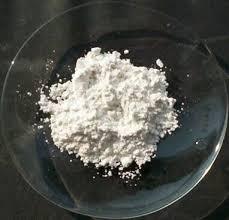
Calcium oxide powder, commonly known as quicklime, is a white, caustic, alkaline solid (CaO) produced by calcining limestone at high temperatures.
Properties
It appears as a fine, odorless powder with high reactivity, density of 3.34 g/cm³, and melting point around 2572°C; it reacts exothermically with water to form calcium hydroxide (slaked lime) and is soluble in acids but not in water.
Production
Obtained by thermal decomposition of calcium carbonate (CaCO₃ → CaO + CO₂) in lime kilns at 900–1200°C, with the powder form achieved through crushing and grinding post-calcination.
Main uses
Widely employed in construction (mortar, cement), steel manufacturing (flux), water treatment (pH adjustment), agriculture (soil stabilization), and chemical processes as a desiccant or precipitant.
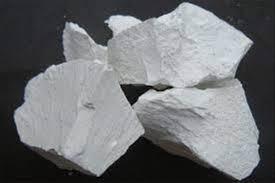
Calcium oxide lumps, also called quicklime lumps, are irregularly shaped, hard white to grayish chunks of CaO produced directly after calcination, typically 25–150 mm in size before optional crushing to powder.
Properties
These lumps have the same chemical reactivity as powder form—strongly alkaline, hygroscopic (absorb moisture and CO₂ from air, crumbling to powder), with density ~3.34 g/cm³ and exothermic hydration to Ca(OH)₂—but offer easier bulk handling and storage with reduced dust.
Production
Formed by heating limestone (CaCO₃) in rotary kilns at 900–1200°C (CaCO₃ → CaO + CO₂), yielding lumps that are cooled, screened, and shipped; high-purity lumps minimize impurities like MgO or SiO₂.
Main uses
Lumps are slaked on-site for mortar/plaster in construction, used as flux in steelmaking, soil stabilizer in agriculture, pH adjuster in water treatment, and raw material for chemicals like CaC₂ or bleaching powder.
Calcium oxalate extra pure is a high-purity grade of CaC₂O₄ (often as monohydrate CaC₂O₄·H₂O), supplied as a fine white crystalline powder with minimal impurities (<0.1% heavy metals, sulfates, chlorides) for precise analytical and laboratory applications.
Properties
It forms odorless, tasteless crystals (monoclinic or tetragonal depending on hydration), insoluble in water (Ksp ~2.3×10⁻⁹), dilute acids, or alcohol, but soluble in strong acids with CO₂ evolution; density ~2.2 g/cm³, decomposes at ~450°C.
Production
Precipitated by mixing calcium chloride or nitrate with oxalic acid or ammonium oxalate solutions under controlled pH and temperature, then filtered, washed, dried, and assayed for purity meeting AR/ACS standards.
Main uses
Extra pure grade serves as a primary standard for calcium titration, analytical reagent in gravimetric analysis, reference material for kidney stone studies, and in ceramics/glass flux or rare earth separation; avoided in food due to low bioavailability.
Calcium nitrite (Ca(NO₂)₂) is a white to light yellow, odorless crystalline powder or deliquescent solid, highly soluble in water, serving primarily as a corrosion inhibitor and accelerator in concrete admixtures.
Properties
It has a density of about 2.23–2.26 g/cm³, decomposes around 390°C (anhydrous form), and forms hydrates like Ca(NO₂)₂·4H₂O; as a strong oxidizer, it reacts with reducing agents and is stable under normal storage but incompatible with combustibles.
Production
Typically prepared by absorbing NOx gases (from nitric acid production or ammonia oxidation) into lime milk (Ca(OH)₂ slurry), followed by filtration, evaporation, cooling, and crystallization of the nitrite-rich solution.
Main uses
Widely added to reinforced concrete (1–4% by cement weight) to passivate steel rebar against chloride-induced corrosion, promote early strength at low temperatures (down to -20°C), and act as antifreeze; also used in fertilizers, dyes, and metallurgy.
Calcium nitrate hydrated extra pure refers to high-purity calcium nitrate tetrahydrate (Ca(NO₃)₂·4H₂O), a colorless, deliquescent crystalline solid meeting analytical reagent (AR) standards with minimal impurities like heavy metals, chlorides, or sulfates.
Properties
It has a melting point of about 42–44°C, density around 1.86 g/cm³, and exceptional water solubility (121–129 g/100 mL at 20°C); pH of 5% solution is 5.0–9.0, and it decomposes above 500°C to CaO, NO₂, and O₂.
Production and purity
Prepared by neutralizing nitric acid with calcium carbonate or hydroxide, followed by evaporation and crystallization; extra pure grades ensure ≥98% assay, low iron (≤0.001%), and clarity in solution for lab reliability.
Main uses
Employed as a fertilizer component, lab reagent for calcium/nitrate analysis, concrete accelerator/corrosion inhibitor, and in wastewater treatment; its high purity suits precise applications like plant nutrition studies or pharmaceutical intermediates.