Thank you for writing to us. One of our executive will reach back to you through your submitted medium. In case there’s an urgency, feel free to connect over WhatsApp for faster response.
Prefer calling? Dial +918048036175 (International callers) or 08048036175 (Indian callers).
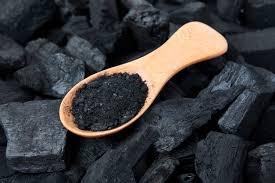
Activated charcoal is produced from carbon-rich materials such as wood, coal, or coconut shells that are heated at high temperatures and then “activated” with gases or chemicals to create a network of microscopic pores.
This activation increases surface area to typically 500–1500 m² per gram, allowing the charcoal to bind (adsorb) a wide range of molecules onto its surface.
Key properties
Activated charcoal appears as a black, odourless material supplied as powder, granules, or pellets, with very low bulk density and extremely high internal porosity.
Its surface chemistry and pore structure can be tailored (e.g., coal-, wood-, or coconut-based grades) to optimise performance for water purification, air treatment, or medical use.
Main applications
Industrial and environmental uses include water and wastewater treatment, air and gas purification, solvent recovery, and decolorising or deodorising in food and chemical processing.
In medicine, oral activated charcoal suspensions are used in hospitals for certain acute poisonings or overdoses, where given within about one hour it can reduce absorption of many toxins from the gut.
Consumer and OTC products use activated charcoal in filters, toothpastes, cosmetic masks, and some supplements marketed for gas and bloating, though evidence for many wellness claims is limited compared with its well‑established filtration and poisoning‑treatment roles.
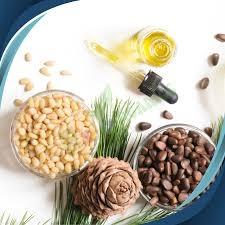
“Natural” indicates the oil is directly derived from cedar (typically species such as Cedrus deodara, Cedrus atlantica, or Juniperus species) by steam distillation of wood, roots, or stumps, without synthetic aroma chemicals added.
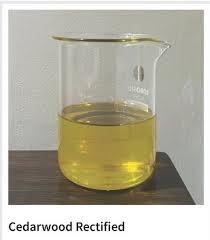
“Rectified” means the crude cedarwood oil is further redistilled or vacuum‑rectified to remove high‑boiling resins and off‑notes, yielding a paler, cleaner oil with a smoother woody scent and more consistent specifications.
Typical properties
Natural rectified cedarwood oil is usually a pale‑yellow to almost colourless liquid with a dry, sweet, woody, balsamic odour and reduced smokiness compared with crude oil.
It contains characteristic sesquiterpenes and alcohols such as cedrene and cedrol, though rectification can enrich or reduce certain fractions depending on whether the target is “super rectified” (high in himachalene) or perfumery grade (richer in atlantones and cleaner woody notes).
Main uses
Because of its refined, stable odour, cedar wood oil natural rectified is widely used in perfumery, soaps, candles, polishes, and household fragrances to provide long‑lasting woody base notes.
It is also used in aromatherapy and massage oils for its calming, grounding scent, and in some formulations as a natural insect‑repellent or for skin and scalp care, subject to usual essential‑oil dilution and safety guidelines.
Cedar wood oil is a traditional immersion oil used in light microscopy to improve resolution with high‑power (usually 100x) objectives by matching the refractive index of glass and reducing light loss by refraction.
Why cedar wood oil is used
Cedar wood immersion oil has a refractive index around 1.51–1.52, very close to that of glass coverslips and objective fronts, so light rays pass through specimen–oil–glass with minimal bending, giving a brighter, higher‑resolution image.
For this reason it was historically the standard immersion medium and is still sold specifically as “cedar wood oil for microscopy” or “immersion oil (cedarwood).”
Practical and safety points
Only the oil‑immersion (100x) objective should be used with cedar wood oil, and a single small drop is placed between cover glass and lens to bridge the air gap.
Cedar wood oil can oxidise and harden, leaving a sticky residue that may damage lens cement or coatings if not cleaned off promptly, so many modern labs now prefer synthetic immersion oils with similar refractive index but better stability, though cedar oil products remain available and effective when used and cleaned correctly.
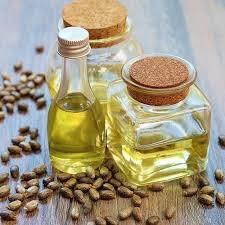
Castor oil is a viscous, non‑volatile triglyceride oil obtained from the seeds of Ricinus communis, typically containing at least about 85% ricinoleic acid.
In refined grades, commercial castor oil is subjected to bleaching and filtration (and sometimes neutralisation and deodorisation) to produce a clear, light‑yellow liquid free from suspended matter and with controlled FFA and moisture levels.
Typical properties
Refined castor oil first special grade (FSG/BSS) is described as a yellow, highly viscous liquid, insoluble in water, with refractive index around 1.477–1.481, acid value typically ≤2, and free fatty acids ≤1%.
High‑purity pharma grades (BP/EP/USP, “super refined” or “ultra refined”) are nearly colourless, low‑odour oils meeting pharmacopoeial limits on ricinoleic acid content, moisture, acid value, residual solvents, and sometimes endotoxins, making them suitable for oral, topical, or even parenteral formulations.
Main uses
Refined/FSG castor oil is widely used as a raw material for castor‑oil derivatives and as a plasticizer and lubricant in resins, elastomers, rubber, coatings, and dielectric fluids.
Pharma‑grade refined castor oil is used as an excipient and emollient in oral capsules, laxative preparations, ointments, eye drops, and injectable formulations, where high purity and stability are critical.
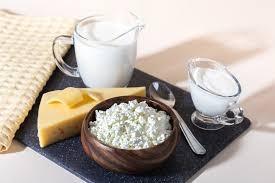
Casein is the main phosphoprotein in milk, forming about 80% of the total protein in cow’s milk and serving as the primary structural and nutritional protein in cheese curd.
Nature and composition
Casein is a family of related proteins (αs1-, αs2-, β-, and κ-casein) that occur in milk as calcium–phosphate–protein complexes called casein micelles, which keep calcium and phosphate stably dispersed.
In pure or commercial form it appears as an amorphous white to yellowish, tasteless, nearly odourless solid, usually produced by precipitating it from skim milk with acid or rennet.
Functional properties and food uses
Casein is amphiphilic and acts as an excellent emulsifier, stabiliser, and texturiser; its salts (e.g., sodium or potassium caseinate) are widely used to stabilise dairy drinks, sauces, processed cheese, desserts, and instant powders.
Nutritionally, casein is a complete, slow‑digesting protein supplying all essential amino acids along with significant calcium and phosphorus, so it is commonly used in protein supplements, diet products, and sports nutrition.
Technical and industrial uses
Technical or industrial casein is used beyond food in adhesives, paper coatings, paints, plastics, leather finishing, and textile sizing because it forms strong, flexible films and binds pigments well.
Its ability to form stable films and bind calcium also underlies specialised uses in pharmaceuticals, cosmetics, and oenology (e.g., caseinate fining agents in wine)
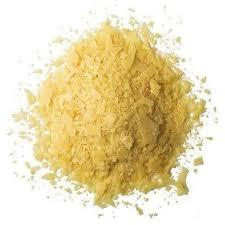
Carnauba wax white refers to a purified, light-colored grade of carnauba wax obtained from the leaves of the carnauba palm (Copernicia prunifera), processed through filtration, centrifugation, and bleaching to achieve a pale yellow to nearly white appearance.
Composition and properties
It consists mainly of aliphatic esters (about 40%), diesters of 4-hydroxycinnamic acid (21%), ω-hydroxycarboxylic acids (13%), and fatty alcohols (12%), with compounds derived from C26–C30 acids and alcohols.
White carnauba wax has a high melting point of 82–86°C, density around 0.97 g/cm³, is among the hardest natural waxes, insoluble in water or ethanol, and soluble when heated in ethyl acetate or xylene.
Grades and processing
Carnauba wax is graded T1 (purest, from young leaves, light color), T3, and T4 (darker, from mature leaves); 'white' typically indicates T1 or highly refined T3 after bleaching for reduced color and impurities.
Main uses
White carnauba wax is used as a food additive (E903) for glazing confectionery, fruit coatings, and chocolate; in cosmetics for lipsticks, creams, and hair products as a film-former and emollient; and in polishes, pharmaceuticals, and printing inks for its gloss, hardness, and stability.
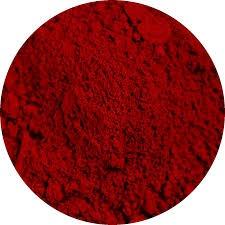
Carmine is a bright red pigment and food colorant obtained from carminic acid, which is extracted from dried female cochineal insects and then converted into an aluminium or calcium salt.
Source and chemistry
Carmine is produced from cochineal insects (Dactylopius coccus) that live on prickly pear cacti; the dried insects contain about 17–24% carminic acid by weight.
Carminic acid is a complex anthraquinone derivative (C₂₂H₂₀O₁₃); when precipitated with aluminium or calcium salts it forms the insoluble red lake pigment known as carmine.
Production process
To prepare carmine, dried, powdered insects are boiled in an ammonia or sodium carbonate solution, the insoluble material is filtered off, and alum is added to precipitate the red aluminium salt of carminic acid.
Additives such as stannous chloride, citric acid, borax, gelatin, or lime may be used to adjust shade and precipitate properties, yielding tones from bright red to purplish red.
Uses
Carmine (E120, Natural Red 4) is widely used as a stable, heat- and light‑resistant red colorant in foods such as confectionery, pastries, yogurts, beverages, as well as in cosmetics and pharmaceuticals.
It is also used historically and artistically as a fine art pigment for watercolours, textiles, and other coatings where a natural red dye is desired.
Safety and labeling notes
Carmine is generally regarded as safe as a food additive, but in rare cases it can trigger allergic reactions, including asthma or anaphylaxis, likely due to residual insect proteins.
Because it is insect‑derived, many regulations and consumer guides require it to be explicitly declared (e.g., “carmine,” “cochineal extract,” or E120), and it is not considered suitable for vegan or some religious dietary restrictions.
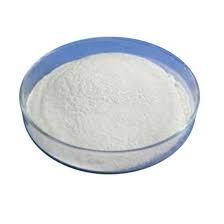
Carboxymethyl cellulose (CMC), often supplied as its sodium salt (sodium carboxymethyl cellulose), is a water-soluble anionic polymer derived from cellulose by substituting hydroxyl groups with carboxymethyl groups (-CH₂COOH).
Structure and properties
CMC features a cellulose backbone of β-1,4-linked D-glucose units with a degree of substitution (DS) typically 0.6–1.2, meaning 0.6–1.2 carboxymethyl groups per glucose unit, which imparts high viscosity, water solubility, and pH stability in the 6.5–11 range.
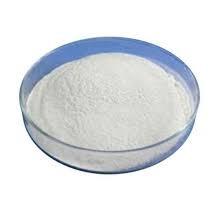
It appears as a white to cream-colored, odorless, free-flowing powder that swells and dissolves in water to form clear, viscous solutions; properties like viscosity and gel strength depend on DS, molecular weight, and substitution uniformity.
Production
Cellulose from wood pulp or cotton is treated with sodium hydroxide to form alkali cellulose, then reacted with sodium monochloroacetate under controlled conditions to introduce carboxymethyl groups, followed by neutralization, purification, drying, and milling.
Main uses
CMC acts as a thickener, stabilizer, binder, and suspending agent in food (E466, e.g., ice cream, sauces), pharmaceuticals (tablets, eye drops), cosmetics, detergents, and industrial applications like drilling muds, paper coatings, and textiles.
Carbolic acid, also known as phenol, is a simple aromatic compound with the formula C₆H₅OH, consisting of a hydroxyl group directly attached to a benzene ring.
Physical properties
Phenol appears as a white to faint pink crystalline solid with a sweet, tar-like odor; it melts at 40.5°C and boils at 181.7°C, with density around 1.07 g/cm³.
It is moderately soluble in water (8.3 g/100 mL at 20°C) due to hydrogen bonding, highly soluble in alcohols and ethers, and forms a characteristic pink solution in alkalis.
Chemical properties
Phenol is a weak acid (pKa 9.95) stronger than alcohols due to resonance stabilization of the phenoxide ion, reacting with bases and active metals to form phenoxides.
The -OH group activates the ring for electrophilic substitution primarily at ortho and para positions, and phenol undergoes reactions like bromination, nitration, and Reimer-Tiemann formylation.
Main uses
Phenol serves as a key intermediate in producing phenolic resins, plastics (e.g., Bakelite), pharmaceuticals (aspirin, antiseptics), dyes, and explosives; historically used as a disinfectant ('carbolic acid').
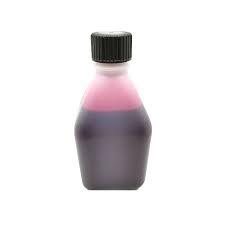
Carbol fuchsin strong (Ziehl-Neelsen solution) is a red primary stain used in the Ziehl-Neelsen technique to detect acid-fast bacteria like Mycobacterium tuberculosis.
Composition
It consists of basic fuchsin (0.5–1.5% w/v, typically 1 g in 10 ml ethanol), dissolved in 5% aqueous phenol (carbolic acid, 5 g in 95 ml water), which acts as a mordant to enhance penetration into waxy cell walls.
Role in staining
In the hot Ziehl-Neelsen method, the slide is flooded with carbol fuchsin and gently heated to steam for 5 minutes, allowing the phenol-fuchsin complex to bind to mycolic acids in acid-fast bacilli, rendering them resistant to decolorization by acid-alcohol.
Procedure and results
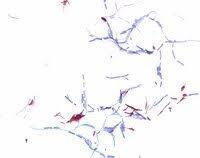
After staining and heating, slides are cooled, rinsed, decolorized with 3% acid-alcohol, counterstained with methylene blue, and examined; acid-fast bacilli appear bright red against a blue background.
Carbol fuchsin powder for microscopy is a dry, certified-grade mixture of basic fuchsin dye used to prepare staining solutions for acid-fast microscopy, particularly Ziehl-Neelsen and Kinyoun methods.
Composition
The powder primarily consists of basic fuchsin (pararosaniline hydrochloride, C.I. 42500), a triarylmethane dye with high purity (typically 85–100% dye content) suitable for reproducible staining; it is dissolved in phenol, alcohol, and water to make the final carbol fuchsin solution.
Preparation and use
To prepare strong Ziehl-Neelsen solution, about 1–10 g of the powder (adjusted for dye content) is dissolved in ethanol or methanol, then mixed with 5% aqueous phenol; the resulting dark red solution is filtered for clarity.
It stains acid-fast bacteria (e.g., Mycobacterium spp.) bright red by penetrating waxy cell walls when heated, resisting decolorization by acid-alcohol.
Quality standards
Microscopy-grade powder meets Biological Stain Commission certification, ensuring low impurities, consistent color intensity (e.g., extinction coefficient), and no precipitates that could interfere with staining.
Carbol fuchsin powder for microscopy is a dry, certified-grade mixture of basic fuchsin dye used to prepare staining solutions for acid-fast microscopy, particularly Ziehl-Neelsen and Kinyoun methods.
Composition
The powder primarily consists of basic fuchsin (pararosaniline hydrochloride, C.I. 42500), a triarylmethane dye with high purity (typically 85–100% dye content) suitable for reproducible staining; it is dissolved in phenol, alcohol, and water to make the final carbol fuchsin solution.
Preparation and use
To prepare strong Ziehl-Neelsen solution, about 1–10 g of the powder (adjusted for dye content) is dissolved in ethanol or methanol, then mixed with 5% aqueous phenol; the resulting dark red solution is filtered for clarity.
It stains acid-fast bacteria (e.g., Mycobacterium spp.) bright red by penetrating waxy cell walls when heated, resisting decolorization by acid-alcohol.
Quality standards
Microscopy-grade powder meets Biological Stain Commission certification, ensuring low impurities, consistent color intensity (e.g., extinction coefficient), and no precipitates that could interfere with staining.