Thank you for writing to us. One of our executive will reach back to you through your submitted medium. In case there’s an urgency, feel free to connect over WhatsApp for faster response.
Prefer calling? Dial +918048036175 (International callers) or 08048036175 (Indian callers).
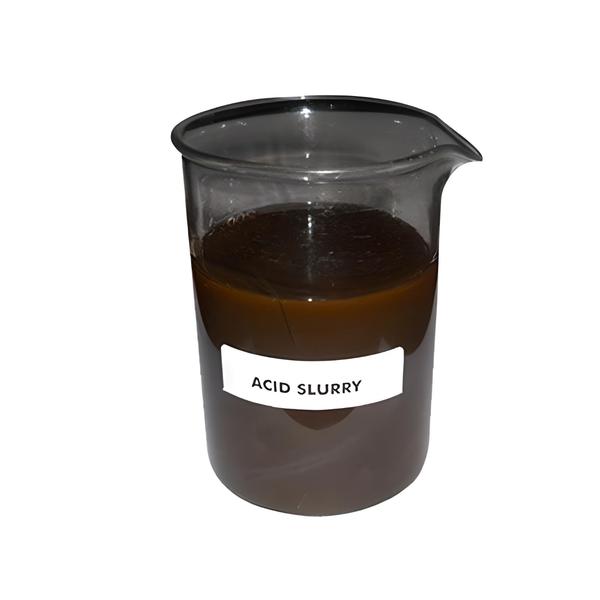
Acid Slurry, commonly referred to as LABSA (Linear Alkyl Benzene Sulphonic Acid), is a high-performance anionic surfactant and detergent raw material widely used in cleaning, textile, and industrial formulations. It is typically available with active matter concentrations of 90% or 96%, and appears as a brown, viscous liquid with strong foaming and emulsifying properties.
Chemical Properties
Main Component: Linear Alkyl Benzene Sulphonic Acid (LABSA).
Typical Purity/Active Matter: 90–96% (by weight).
Physical Appearance: Brown viscous liquid; some variants may be pale brown clear or yellowish honey brown.
Free Sulphuric Acid: 1.5–7% max (admixture, depending on grade).
Free Oil (NDOM): Max 1%.
Specific Gravity: 1.015–1.2 (at 25°C).
Acid Value: 220–240 mg KOH/g (for 90% grade).
Color (Klett scale): <60 degree klet; typically 20–25 for higher grades.
Other names: Alkyl Benzene Sulphonate (ABS), Dodecyl Benzene Sulphonic Acid.
Uses and Applications
Detergents and Cleaning Agents: Key ingredient in laundry detergents, dishwashing liquids, liquid soaps, detergent powders, cakes, scouring bars, and cleaning powders for its high foaming and cleaning efficiency.
Textile Industry: Used as a wetting agent and emulsifier for dyeing, scouring, and removing oils/impurities from fabrics.
Industrial Cleaners: Strong degreasing properties ideal for heavy-duty cleaning agents in manufacturing and processing.
Agrochemicals and Paints: Acts as an emulsifying/stabilizing agent in certain paint and agrochemical formulations for mixing oil and water phases.
Leather Industry: Used in fat liquoring and cleaning of raw hides and skins.
Other: Sometimes found in oil soaps and similar products for surfactant properties.
Functional Characteristics
Lowers surface tension of water, making it an excellent cleaning and wetting agent.
Produces stable foam; required for lifting and removing dirt in washing and cleaning operations.
Highly soluble in water (liquid variant); facilitates easy formulation.
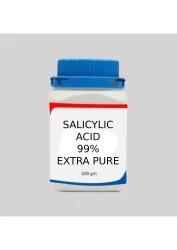
Acetyl salicylic acid extra pure is a high-purity form of acetylsalicylic acid, commonly known as aspirin, with at least 99% purity and is used extensively in analytical chemistry, pharmaceutical synthesis, and medical research.
Chemical Properties
Molecular Formula:
C
9
H
8
O
4
C
9
H
8
O
4
(sometimes noted as
C
8
H
8
O
4
C
8
H
8
O
4
due to variant notations).
Assay (purity): ≥99% (extra pure grade).
Physical Appearance: White, crystalline powder or almost white crystals.
Density: 1.40 g/cm³.
Melting Point: 134–136°C (lit.), typically about 136°C.
Boiling Point: ~140°C (decomposes on boiling).
Solubility: 3–10 mg/mL in water at 25°C, freely soluble in ethanol and decomposes in aqueous base.
Loss on Drying: ≤0.5%.
Heavy Metals: ≤10 ppm.
Odor: Odorless or nearly odorless.
Uses and Applications
Pharmaceuticals: Used primarily as an analgesic (pain reliever), antipyretic (fever reducer), and anti-inflammatory drug in medicines and formulations.
Research and Analysis: Utilized in laboratories for synthesis, purity analysis, and chemical demonstrations.
Cardiovascular Medicine: Low-dose formulations are prescribed to prevent blood clots, heart attacks, and strokes.
Veterinary Medicine: Sometimes administered to dogs and other animals for pain and inflammation under veterinary supervision.
Safety and Handling
Harmful if swallowed and may cause irritation; handled with personal protective equipment in laboratory settings.
Store in a cool, dry place, protected from moisture and direct sunlight, in tightly sealed containers.
Stable in dry air, but hydrolyzes gradually in moisture, releasing acetic acid and salicylic acid.
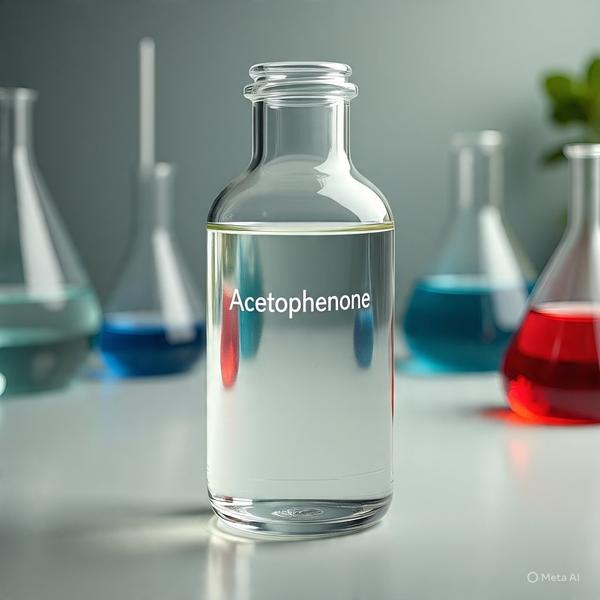
Acetophenone extra pure is a high-purity aromatic ketone with at least 99% purity, widely used in laboratories, pharmaceuticals, perfumery, and chemical synthesis for its consistent properties and minimal impurities.
Chemical Properties
Molecular Formula: C₆H₅COCH₃ (sometimes noted as C₈H₈O)
Purity: ≥99.0% (extra pure)
Appearance: Clear, colorless to slightly yellow liquid
Density: ~1.025–1.03 g/mL at 20–25°C
Melting Point: 19–20°C (crystallizes near room temperature)
Boiling Point: ~202°C
Refractive Index (nD20): 1.5325–1.5345
Solubility: Slightly soluble in water, freely in alcohol, chloroform, and ether
Odor: Characteristic sweet, floral, almond-like
Uses and Applications
Perfume Industry: Used for its pleasant aroma in perfumes and fragrances.
Pharmaceuticals: Intermediate in the synthesis of medicines and sedatives.
Resins & Polymers: Ingredient in resin and specialty polymers manufacture.
Laboratory Reagent: Utilized in organic synthesis, as a solvent, and reagent in advanced chemical reactions.
Other: Can be used as a flavoring agent, pesticide attractant, and for chemical demonstrations.
Safety and Handling
Avoid direct contact and inhalation; use in well-ventilated areas with appropriate personal protective equipment.
Store tightly sealed, away from oxidizers and open flames, in a cool, ventilated space.Acetophenone extra pure is a high-purity aromatic ketone with at least 99% purity, widely used in laboratories, pharmaceuticals, perfumery, and chemical synthesis for its consistent properties and minimal impurities.
Chemical Properties
Molecular Formula: C₆H₅COCH₃ (sometimes noted as C₈H₈O)
Purity: ≥99.0% (extra pure)
Appearance: Clear, colorless to slightly yellow liquid
Density: ~1.025–1.03 g/mL at 20–25°C
Melting Point: 19–20°C (crystallizes near room temperature)
Boiling Point: ~202°C
Refractive Index (nD20): 1.5325–1.5345
Solubility: Slightly soluble in water, freely in alcohol, chloroform, and ether
Odor: Characteristic sweet, floral, almond-like
Uses and Applications
Perfume Industry: Used for its pleasant aroma in perfumes and fragrances.
Pharmaceuticals: Intermediate in the synthesis of medicines and sedatives.
Resins & Polymers: Ingredient in resin and specialty polymers manufacture.
Laboratory Reagent: Utilized in organic synthesis, as a solvent, and reagent in advanced chemical reactions.
Other: Can be used as a flavoring agent, pesticide attractant, and for chemical demonstrations.
Safety and Handling
Avoid direct contact and inhalation; use in well-ventilated areas with appropriate personal protective equipment.
Store tightly sealed, away from oxidizers and open flames, in a cool, ventilated space.Acetophenone extra pure is a high-purity aromatic ketone with at least 99% purity, widely used in laboratories, pharmaceuticals, perfumery, and chemical synthesis for its consistent properties and minimal impurities.
Chemical Properties
Molecular Formula: C₆H₅COCH₃ (sometimes noted as C₈H₈O)
Purity: ≥99.0% (extra pure)
Appearance: Clear, colorless to slightly yellow liquid
Density: ~1.025–1.03 g/mL at 20–25°C
Melting Point: 19–20°C (crystallizes near room temperature)
Boiling Point: ~202°C
Refractive Index (nD20): 1.5325–1.5345
Solubility: Slightly soluble in water, freely in alcohol, chloroform, and ether
Odor: Characteristic sweet, floral, almond-like
Uses and Applications
Perfume Industry: Used for its pleasant aroma in perfumes and fragrances.
Pharmaceuticals: Intermediate in the synthesis of medicines and sedatives.
Resins & Polymers: Ingredient in resin and specialty polymers manufacture.
Laboratory Reagent: Utilized in organic synthesis, as a solvent, and reagent in advanced chemical reactions.
Other: Can be used as a flavoring agent, pesticide attractant, and for chemical demonstrations.
Safety and Handling
Avoid direct contact and inhalation; use in well-ventilated areas with appropriate personal protective equipment.
Store tightly sealed, away from oxidizers and open flames, in a cool, ventilated space.
Acetophenone extra pure is a high-grade aromatic ketone with a minimum purity of 99% used in research, industry, and pharmaceuticals, characterized by its clear liquid form, slight aroma, and consistent physical properties.
Chemical Properties
Molecular Formula: C₈H₈O (or C₆H₅COCH₃)
Purity (Assay by GC): ≥99.0% (extra pure grade)
Appearance: Clear, colorless to slight yellow liquid
Density: ~1.025–1.03 g/mL at 20–25°C
Melting Point (Freezing Point): 19–20°C
Boiling Point: ~202°C
Refractive Index (nD20): 1.5325–1.5345
Solubility: Slightly soluble in water, freely soluble in alcohol, chloroform, and diethyl ether
Odor: Sweet, pungent, and floral - used in fragrances
Uses and Applications
Fragrance & Perfumery: Common ingredient in perfumes and soaps due to its sweet, almond-like scent.
Pharmaceutical Intermediate: Used in synthesizing APIs and drugs, including sleep-inducing agents.
Resin & Polymer Production: Precursor for producing resins and specialty polymers.
Laboratory Reagent: Employed in organic synthesis, carbonyl reduction, and chemical demonstrations.
Food Additive & Attractant: Used as a food additive and as an attractant in pesticide formulations for crops.
Specialty Solvent: Solvent and catalyst in various chemical and industrial processes.
Safety and Handling
Handle with standard laboratory precautions: avoid contact with eyes/skin and inhalation of vapors.
Store tightly closed in a cool, ventilated area away from oxidizers; avoid exposure to open flames due to its combustibility.
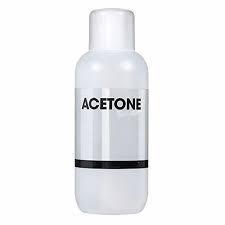
Acetone extra pure is a high-purity solvent widely used in laboratories and industrial settings, featuring at least 99% purity and valued for its effectiveness in analytical processes, organic synthesis, and cleaning applications.
Chemical Properties
Molecular Formula: (CH₃)₂CO
Purity: ≥99% (extra pure grade)
Physical State: Clear, colorless, volatile liquid with a characteristic, mint-like or pungent odor
Density: 0.789–0.792 g/mL at 20°C
Boiling Point: 55–57°C
Melting Point: –95 to –96°C
Flash Point: –20°C
Solubility: Miscible with water, alcohol, chloroform, and ether; complete in water
Vapor Density: 2 (relative to air = 1)
Residue After Evaporation: ≤0.005%
pH: Neutral (pH 7)
Uses and Applications
Laboratory Reagent: Used as a high-purity solvent for chromatography, sample preparation, and analytical chemistry.
Cleaning Agent: Effective for cleaning glassware, laboratory instruments, and for degreasing processes due to its fast evaporation and residue-free finish.
Industrial Production: Used in plastics, textiles, paints, rubber, adhesives, and as an intermediate in pharmaceutical and cosmetic industries.
Medical and Cosmetic: Present in nail polish removers, skin treatments, and as a component in certain medications and cleaning agents.
Other: Utilized for precision cleaning in electronics, and as a standard solvent in research and quality control procedures.
Safety and Handling
Highly flammable liquid and vapor—keep away from ignition sources, heat, and open flames.
Causes severe eye irritation, may irritate the respiratory tract with inhalation of vapor.
Use in well-ventilated spaces and wear personal protective equipment (gloves, goggles, masks).
Should be stored in tightly closed containers away from oxidizing agents and direct sunlight.
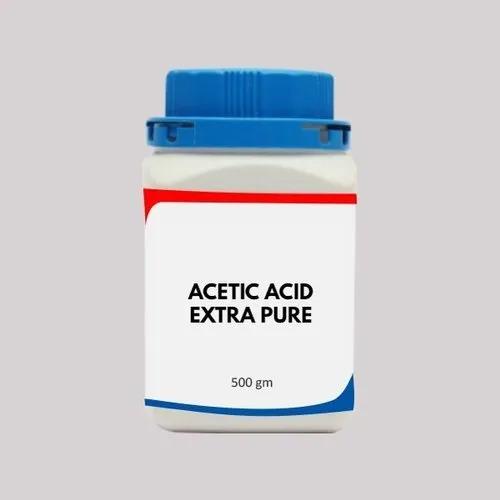
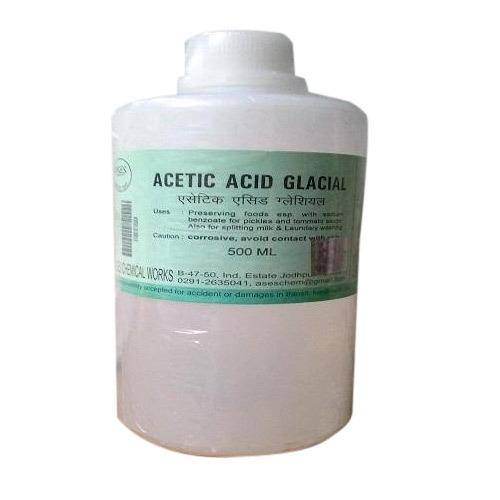
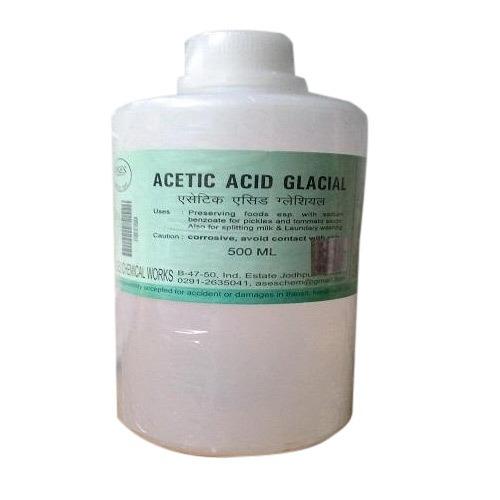
Acetic Acid Glacial extra pure is a high-purity grade of acetic acid commonly used in laboratories, industrial production, and specialized chemical applications, characterized by a minimum purity of 99.5% and a clear, colorless appearance with a strong vinegar-like odor.
Chemical Properties
Molecular Formula: CH₃COOH.
Purity: Minimum 99.5% (extra pure grade; some variants up to 99.85%).
Physical Appearance: Clear, colorless liquid.
Density: 1.047 - 1.052 g/mL at 20°C.
Boiling Point: 118.1°C.
Melting/Freezing Point: 15.5–16.6°C (crystallizes at room temperature).
Solubility: Miscible with water, alcohol, and various organic solvents.
Non-volatile matter: Less than 0.01%.
Impurities: Chloride, sulfate, arsenic, lead—each present as trace (max. 0.0005% or lower).
Corrosivity: Corrosive to metals and tissue, flammable.
Uses and Applications
Laboratory Reagent: Used as a solvent, pH adjuster, and reagent in analytical and research labs.
Industrial Production: Essential raw material for acetate esters, cellulose acetate (films/textiles), vinyl acetate, pharmaceuticals (aspirin, APIs), and synthetic fibers.
Cleaning Agent: Used to clean and descale surfaces, especially in metalworking and manufacturing.
Food and Beverage: Acts as a preservative, acidity regulator, and antimicrobial agent (diluted forms only; not all extra pure grades are food-safe).
Cosmetics and Pharmaceuticals: Ingredient in various products due to its antimicrobial and acidifying properties.
Agriculture: Listed as a soil pH regulator and herbicide component under certain use cases.
Other: Applied in dyes, rubber, and leather industries for chemical synthesis and processing.
Safety and Handling
Glacial acetic acid is highly concentrated and must be handled with care: it is corrosive to skin, eyes, and mucous membranes, and its vapors can be hazardous if inhaled.
Proper ventilation, personal protective equipment, and strict storage protocols are recommended for laboratory and industrial use.
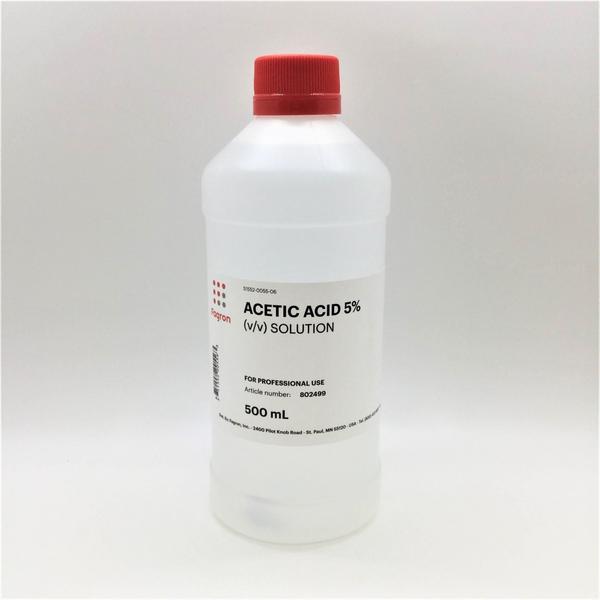
Acetic Acid 5% is a clear, colorless, aqueous solution containing 5% acetic acid (CH₃COOH), with a sharp, vinegar-like odor, suitable for laboratory, industrial, and medical applications as a standard mild acid reagent.
Typical Properties
Concentration: 5% (w/v or v/v) acetic acid in distilled water.
Appearance: Clear, colorless liquid.
Odor: Pungent, sour, distinctly vinegar-like.
Solubility: Completely miscible with water.
pH: Typically around 2.5–3.
Laboratory and Industrial Applications
Commonly used in pH adjustment for chemical and biological buffers, acid-base titrations, and as a reagent in organic synthesis.
Utilized as a mild cleaning agent for glassware and instruments, stain remover, and surface sterilizer.
Essential for DNA/protein extraction, food testing protocols, and as a fixative or rinse in microscopy/histology procedures.
Safety and Handling
Irritates eyes, skin, and respiratory tract; use gloves, eye protection, and operate in ventilated areas.
Store away from strong acids, bases, ignition sources, and direct sunlight.
Avoid ingestion, prolonged skin contact, and inhalation of vapors.
Acetic Acid 5% remains a standardized laboratory and clinical reagent, valued for its consistency, versatility, and ease of use with basic laboratory safety measures.
Acetic Acid 3% is a clear, colorless, aqueous solution of acetic acid (CH₃COOH) at a 3% concentration, notable for its vinegar-like odor and mild acidity, and is used widely in laboratories for various applications.
Typical Properties
Concentration: 3% (w/v or v/v) acetic acid in water
Appearance: Clear, colorless liquid
Odor: Sharp, sour, vinegar-like
pH: Approximately 2.5
Solubility: Completely miscible with water
Laboratory and Medical Applications
Commonly used for histology and cytology, notably as a pH adjuster or rinse in tissue staining protocols (e.g., Alcian blue staining).
Functions as a mild cleaning agent for glassware, removing mineral deposits and residues from lab equipment.
Sometimes used as a topical antiseptic or as a reagent in biochemical procedures.
Safety and Handling
Causes mild irritation to skin, eyes, and respiratory tract; PPE such as gloves and eye protection are recommended.
Handle in well-ventilated spaces and avoid breathing fumes or vapor.
Store in a tightly closed container away from incompatible substances and direct sunlight.
Acetic Acid 3% is a standardized reagent for controlled acidity requirements, favored for its safety, versatility, and broad utility in medical, biological, and educational labs
Acetic Acid 10% is a clear, colorless, aqueous solution of acetic acid (CH₃COOH) at a concentration of 10% by weight or volume, and it emits a characteristic vinegar-like odor. This laboratory reagent is used widely in analytical chemistry, biology, and industrial processes due to its mild acidic strength and reliable performance.
Typical Properties
Concentration: 10% (w/v or v/v) acetic acid in water
Appearance: Clear, colorless liquid
Odor: Sharp, pungent, vinegar-like
Density: Approx. 1.05 g/cm³
Solubility: Miscible with water in all proportions
Laboratory and Industrial Applications
Used as a reagent in titrations, protein assays, and various synthesis processes.
Acts as a food preservative, cleaning agent, and pH adjuster in various formulations.
In cell biology, employed as a fixative and for preparing buffer solutions.
Safety and Handling
Causes irritation to eyes, skin, and respiratory tract, especially at higher concentrations; always handle with protective gloves and goggles, and work in a ventilated area.
Avoid ingestion and prolonged skin contact.
Store in a cool, dry, ventilated place away from incompatible substances and open flames.
Acetic Acid 10% is a standard, versatile laboratory solution, easy and safe to handle with basic precautions, and suitable for a broad range of chemical, biological, and industrial uses.
Acetanilide for Synthesis is a high-purity grade of acetanilide (N-phenylacetamide), widely used as an intermediate and reagent in laboratory organic synthesis. It appears as a white, odorless, crystalline leaf- or flake-like solid and is selected for consistent quality in chemical research and manufacturing.
Specification and Physical Properties
Molecular Formula: C₈H₉NO
Purity: Typically ≥98.5% for synthesis grade
Melting Point: 114–116°C
Boiling Point: 304°C
Appearance: White crystalline powder or leaf-like flakes
Solubility: Slightly soluble in water; soluble in alcohol, acetone, and hot water
Laboratory Applications
Synthesis Intermediate: Used in the production of dyes, rubber accelerators, pharmaceuticals (such as penicillin), and camphor.
Teaching Labs: Classic subject for acetylation reactions and recrystallization/purification technique demonstrations.
Reference Standard: Useful for organic qualitative analysis, controllable melting point experiments, and demonstration of amide formation.
Research: Precursor to sulfa drugs and other aromatic amide derivatives for pharmacological testing.
Safety and Handling
Harmful if ingested, inhaled, or absorbed through the skin; long-term exposure can damage the liver and kidneys and may cause methemoglobinemia (symptoms: bluish skin, headache, dizziness).
Handle with gloves, goggles, and adequate ventilation; avoid eating/drinking in work areas and wash hands after use.
Store tightly sealed in a cool, dry, labelled container.
Acetanilide for Synthesis remains a laboratory standard for reaction experiments and industrial chemical preparation, valued for its purity, stability, and versatility.
Acetamide (CH₃CONH₂) is a simple amide derived from acetic acid, appearing as a white, odorless, crystalline solid commonly used as a laboratory reagent, solvent, and plasticizer.
Chemical Properties
Molecular formula: CH₃CONH₂ (C₂H₅NO)
Molar mass: 59.07 g/mol
Density: 1.159 g/cm³
Melting Point: 79–81°C
Boiling Point: 221.2°C
Appearance: White crystalline solid; odorless or faint “mousy” odor
Solubility: Highly soluble in water, ethanol, and many organic solvents
Laboratory Uses
Acts as a solvent for organic and inorganic compounds due to high polarity and dielectric constant.
Used as a plasticizer and softener in leather, textiles, paper, films, and explosives.
Serves as a precursor for chemical synthesis (e.g., methylamine), in soldering flux, and as stabilizer for lacquers and explosives.
Integral to biochemical and microbiological acetamide utilization tests for bacterial differentiation.
Safety and Handling
Wear gloves, protective clothing, and eye protection; avoid skin and eye contact.
Acetamide is suspected of being a carcinogen, so exposure should be minimized via good laboratory practices, ventilation, and hygiene.
Avoid ingestion, inhalation of dust, and contact with strong acids or bases.
Acetamide is valued as a versatile, polar solvent and chemical intermediate, but laboratory safety protocols must be followed strictly due to its potential health risks.
Acetaldehyde is a clear, colorless liquid or gas with a pungent, suffocating odor, widely used as a chemical intermediate and in laboratory research.
Chemical Properties
Molecular formula: CH₃CHO (C₂H₄O)
Molar mass: 44.05 g/mol
Density: 0.784 g/cm³ at 20°C
Boiling point: 20.2°C
Melting point: -123.5°C
Solubility: Miscible with water, ethanol, benzene, acetone; slightly soluble in chloroform
Odor: Pungent, choking, or fruity aroma
Laboratory Uses
Chemical synthesis precursor for acetic acid, peracetic acid, pentaerythritol, pyridine derivatives, and other compounds.
Used in research studies for reaction mechanisms, chemical kinetics, and analytical calibrations (especially gas chromatography standards).
Important for studying metabolic pathways and testing reagents (e.g., Schiff’s reagent for aldehyde detection).
Safety and Handling
Highly flammable—keep away from ignition sources, sparks, and flames.
Can cause respiratory, skin, and eye irritation; handle with gloves, goggles, and in well-ventilated spaces.
Classified as a carcinogen, mutagen, and teratogen—use extreme caution and always follow lab safety protocols.
Store in cool, dry, tightly-sealed containers away from oxidizers.
Acetaldehyde is a vital reagent in chemical laboratories, valued for its reactivity and analytic utility, but it must be handled with strict safety measures due to its hazardous nature.