
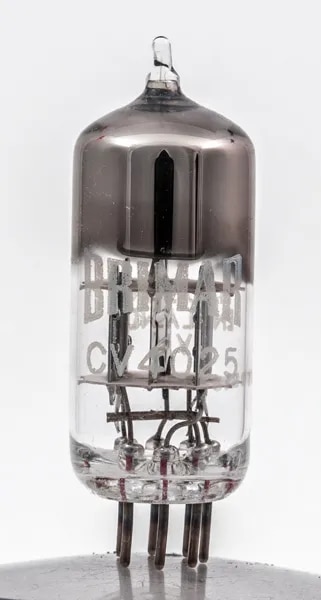
Diode Valve Characteristics Apparatus
Description
A Diode Valve Characteristics Apparatus is a laboratory instrument designed to study and demonstrate the electrical behavior of diode vacuum tubes. It includes mounted diode valves, power supplies, variable voltage controls, and measurement instruments like voltmeters and ammeters for observing current and voltage across the diode under different conditions.
Components and Functions
Diode Valve: The core component whose forward and reverse conduction is tested.
DC Regulated Power Supply: Provides a variable high tension (0-300 VDC) voltage to the diode for operational testing.
Low Tension Power Supply: Supplies filament voltage (0-6.3VAC) to heat the cathode and enable electron emission.
Variable Voltage Control: Allows accurate adjustment of anode voltage to measure diode responses at various levels.
Measurement Instruments: Typically includes analog or digital meters for direct reading of voltage and current values.
Control Panel: Houses all components arranged for easy connections, wiring terminals, and experimental configurations.
Purpose and Usage
Used to observe the diode's current-voltage (I-V) characteristics, showing forward bias conduction and reverse bias blocking.
Demonstrates rectifying behavior where current flows in one direction only.
Helps understand diode parameters such as forward voltage drop, peak inverse voltage, and leakage current.
Employed widely in educational labs and research to teach semiconductor and vacuum tube diode properties.
This apparatus provides hands-on, practical experience in electronic component behavior, crucial for electronics and physics students and professionals.


