
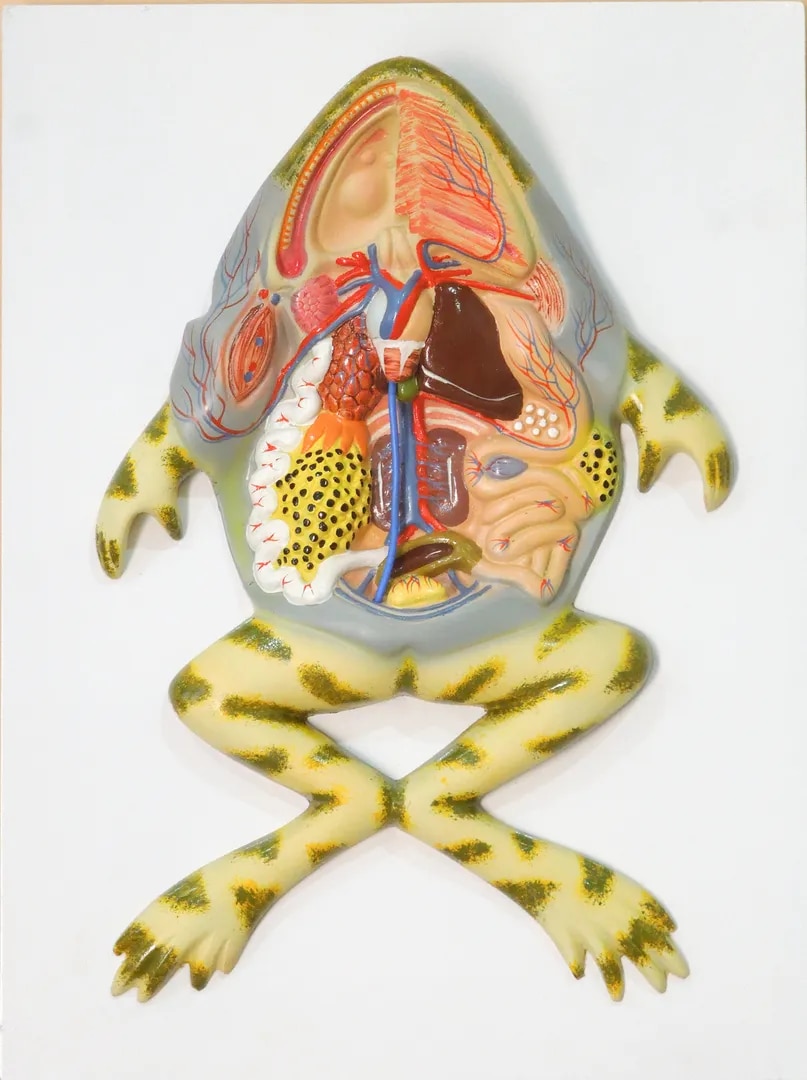
Frog Digestive System
Description
Structure and Organs
The system includes the mouth, buccal cavity, pharynx, oesophagus, stomach, small intestine (duodenum and ileum), large intestine (rectum), and ends at the cloaca—which also handles excretory and reproductive wastes.
Digestive glands include the liver (producing bile stored in the gallbladder), pancreas (secreting enzymes to duodenum), and mucous glands in the buccal cavity.
The alimentary canal is lined with mucosa and villi that maximize nutrient absorption—this is especially vital in the small intestine where blood capillaries and lymph vessels (lacteals) pick up digested food.
Digestive Process
Food is taken in by the wide mouth and trapped by sticky tongue and pointed teeth.
Digestion starts in the stomach with muscular churning and gastric juice action; further breakdown of fats, proteins, and carbohydrates continues in the small intestine with help from bile and pancreatic juice.
Absorption of nutrients takes place as digested molecules pass into blood or lymph, while water and minerals are reabsorbed in the large intestine.
Waste and remains are expelled via the cloaca.
Specifications
| Model No. | N-EM068 |
|---|


