
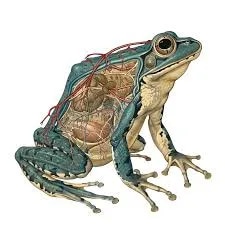
Frog Venous System
Description
Main Components
Systemic Veins:
Two precaval veins (anterior venae cavae) and one postcaval vein (posterior vena cava) open into the sinus venosus, the collecting chamber just before the right atrium.
Each precaval is formed from the union of three veins: external jugular (from tongue, floor of mouth), innominate (internal jugular from brain, subscapular from shoulder/back), and subclavian (brachial from forelimb, musculocutaneous from skin/muscles).
The postcaval vein receives renal veins (from kidneys), genital veins (from gonads), and hepatic veins (from liver).
Portal Vein Systems:
The renal portal system collects blood from the hind limbs (sciatic/femoral veins) via renal portal veins into the kidneys, providing a double filtration step before blood re-enters the main veins.
The hepatic portal vein gathers blood from digestive organs (stomach, intestine, pancreas) and delivers it to the liver for nutrient processing before joining the postcaval.
Pulmonary Veins:
Two pulmonary veins collect oxygenated blood from the lungs and drain it directly into the left atrium.
Blood from the skin also joins systemic veins through musculocutaneous branches as frogs use their skin for respiration
Specifications
| Model No. | N-EM070 |
|---|


