
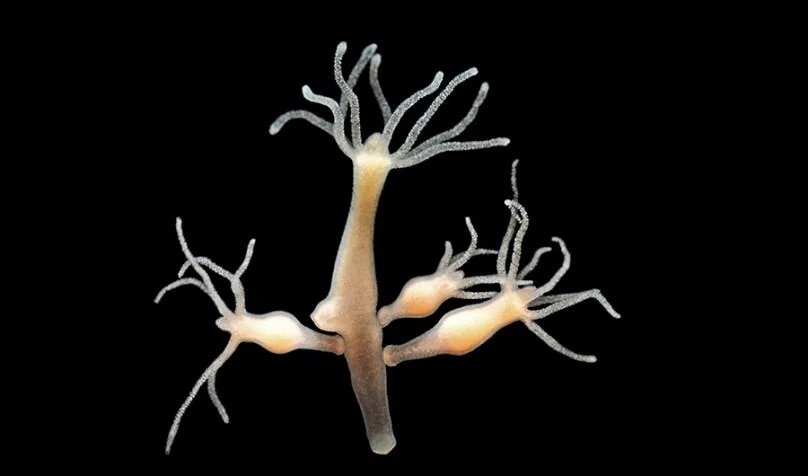
Hydra
Description
Hydra is a genus of small, tubular, freshwater animals belonging to the phylum Cnidaria, renowned for their simple structure, predatory behavior, and remarkable regenerative capacity.
Structure and External Morphology
Hydra has a radially symmetric, cylindrical body, typically 1–30 mm long, anchored at the base by an adhesive structure called the basal disc.
The body wall comprises two layers: the outer epidermis and the inner gastrodermis, separated by a non-cellular mesoglea.
The basal disc secretes a sticky fluid, enabling the Hydra to attach to submerged surfaces such as aquatic plants or rocks.
Specialized Features
At the free end is the hypostome (mouth), surrounded by 6–12 long, flexible tentacles equipped with specialized stinging cells called cnidocytes.
Cnidocytes contain nematocysts—capsules with coiled, dart-like threads and neurotoxin—used to immobilize and capture prey.
The tentacles can extend, retract, and grasp prey, transferring food to the mouth for digestion in the central gastrovascular cavity.
Internal Organization
Hydra is diploblastic—its two tissue layers contain simple, unspecialized cells including muscle, gland, nerve, and stem cells for continuous regeneration.
Respiration and waste excretion occur across the body surface; the mouth opening is used for both ingestion and eliminating undigested remains.
Specifications
| Model No. | N-EM067 |
|---|


