
Life History Of Butterfly
Description
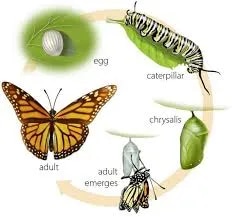
The life history of a butterfly showcases complete metamorphosis, progressing through four distinct stages: egg, larva (caterpillar), pupa (chrysalis), and adult butterfly.
Butterfly Life Cycle Stages
Egg: Females lay small, round, oval, or cylindrical eggs on the leaves or stems of host plants. These eggs hatch in days to weeks, depending on species and environmental conditions.
Larva (Caterpillar): The hatching caterpillar emerges and feeds voraciously, growing quickly and shedding its skin (molting) several times. Caterpillars eat leaves, storing energy for future development.
Pupa (Chrysalis): When fully grown, the caterpillar encases itself in a protective chrysalis. Inside, its body is dramatically reorganized—organs, wings, and legs develop as the pupa transforms into an adult.
Adult Butterfly: The adult butterfly emerges from the chrysalis, expands and dries its wings, then flies away. The primary function of the adult stage is dispersal, mating, and egg-laying to begin a new cycle.
Additional Details
Most butterfly life cycles take several weeks; some species complete multiple generations per year, while others may take longer in colder climates.
Metamorphosis allows butterflies to occupy different ecological niches at each stage: larvae are adapted for feeding; adults for reproduction and pollination.
Educational models often depict each stage for classroom use, illustrating the transformation from egg to adult.
This process exemplifies nature’s complexity and adaptation, with dramatic changes in form and function at every stage.
Specifications
| Model No. | N-EM086 |
|---|


