
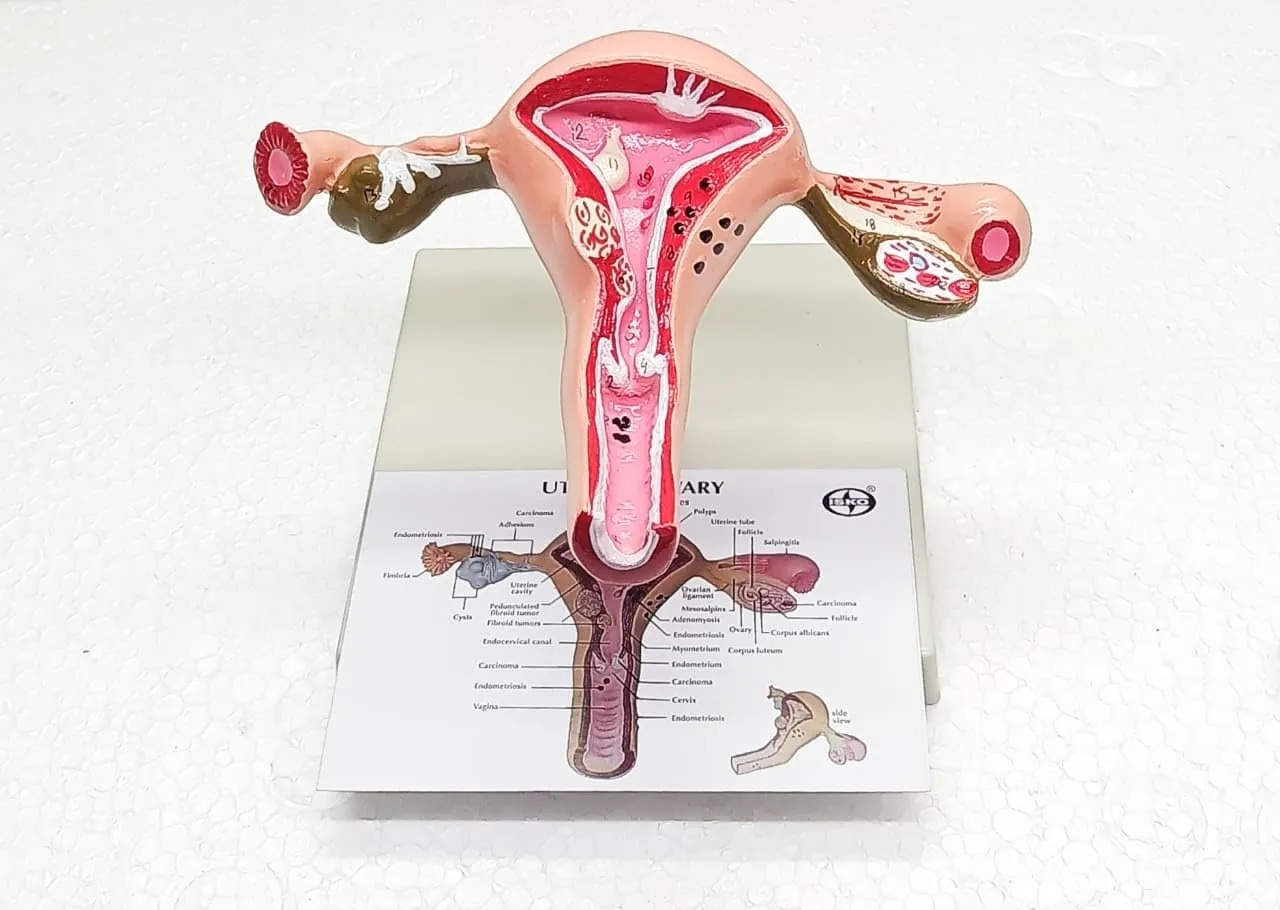
Ls Ovary
Description
Key Features of L.S Ovary
Ovary: The ovary is the swollen basal portion of the carpel (female reproductive organ), critical for seed formation. It serves as the protective chamber for ovules (future seeds) and becomes the fruit after fertilization.
Ovules: Tiny structures inside the ovary; each ovule contains an egg cell. After fertilization, ovules develop into seeds.
Style and Stigma: Although the main focus is on the ovary, the attached style (a slender stalk) and stigma (the pollen-receptive tip) are often seen at the top of the L.S, illustrating their connectivity in the female reproductive pathway.
Placenta: Tissue within the ovary wall where ovules are attached. Depending on the plant, placentation can be axile, parietal, basal, or free central.
Types of Ovary According to Position
Superior Ovary: Located above the point where other floral parts attach (as in peas and beans).
Inferior Ovary: Positioned below the attachment of floral parts (as in cucumber, apple, or banana).
Half-Inferior Ovary: Partially embedded in the receptacle, with floral parts attached around the middle (seen in some families like Lythraceae).
Significance
The L.S of the ovary allows visualization of the chamber structure, arrangement of ovules, and placentation. It is crucial in plant reproductive studies, hybridization, and botanical illustration.
Specifications
| Model No. | N-EM0122 |
|---|


