
Thank you for writing to us. One of our executive will reach back to you through your submitted medium. In case there’s an urgency, feel free to connect over WhatsApp for faster response.
Prefer calling? Dial +918048036175 (International callers) or 08048036175 (Indian callers).
Pitcher plants are a group of carnivorous plants whose leaves are uniquely modified to form deep, tubular “pitchers” that trap and digest insects and other small animals. These plants are found in nutrient-poor, acidic environments such as bogs and swamps, and they obtain vital nutrients—especially nitrogen—from their prey.
Structure and Key Features
Pitcher-Shaped Leaves: The defining feature is a hollow, tube-like leaf that forms the “pitcher.” The rim (peristome) is slippery and often produces nectar that lures insects.
Lid or Operculum: A structure that partly covers the opening of the pitcher; it prevents excess rainwater from diluting the digestive fluid and may also help direct prey into the trap.
Slippery Inner Walls: The inner lining of the pitcher is very smooth, covered with downward-pointing hairs or waxy scales to prevent trapped prey from escaping.
Digestive Fluid: The bottom of the pitcher contains a pool of liquid filled with digestive enzymes and bacteria, which break down the soft tissues of the captured prey so that nutrients can be absorbed by the plant.
Mechanism of Capture: Insects and small animals are attracted by color, scent, and nectar secreted near the rim. When an organism lands, it often slips on the smooth edge, falls into the cavity, and drowns in the fluid. The inner surface and the fluid together ensure that prey cannot escape, and digestion proceeds over several days.
Adaptations
Pitcher plants have evolved these trapping mechanisms to supplement the lack of nutrients (especially nitrogen and phosphorus) in their native soil.
Some pitcher plants (like Nepenthes gracilis) even use the impact of raindrops to catapult insects into the trap.
Notable Examples
Nepenthes (tropical Asian pitcher plants)
Sarracenia (North American pitcher plants)
Darlingtonia californica (Cobra lily)
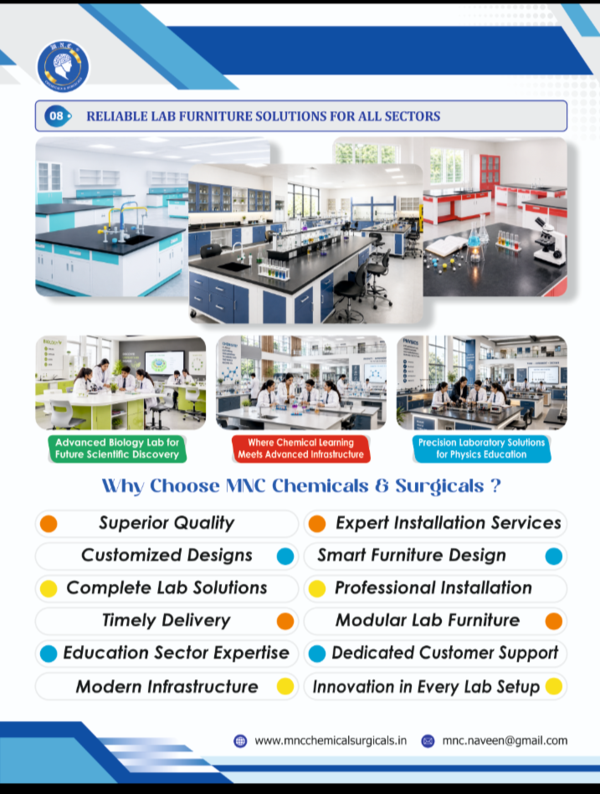
Welcome to the world of MNC Modular Laboratory Furniture! Our top-of-the-line modular laboratory furniture is designed to meet all your laboratory needs with ease and efficiency. Made with high-quality materials, our furniture is not only durable but also customizable to suit your specific requirements. With its sleek and modern design, it will give your lab a professional look while maximizing space utilization. Our modular furniture allows for easy installation and reconfiguration, making it perfect for any type of laboratory setting. Say goodbye to cluttered workspaces and hello to a well-organized and functional lab with MNC Modular Laboratory Furniture. Upgrade your lab today and experience the convenience and versatility of our top-notch modular furniture!
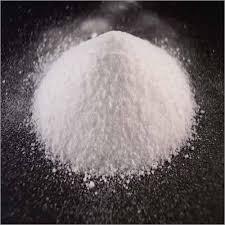
Ferrous borate extra pure is a high-quality iron(II) borate compound (commonly referred to as iron(II) borate or ferrous borate), used predominantly in laboratory and industrial settings for applications that demand high purity standards. It typically appears as a fine, air-sensitive solid and is valued for its chemical stability under controlled conditions. The compound features a high degree of purity, making it especially suitable for analytical work, advanced research, and select industrial processes.
Product Description for Website
Ferrous borate extra pure (Iron(II) borate) is a premium-grade inorganic salt prepared to strict purity standards, ensuring low levels of contaminants and accurate stoichiometry for scientific and technical applications. The product is carefully processed and packaged to maintain its chemical integrity and support reliable results in laboratory analysis and synthesis.
Synonyms: Iron(II) borate, Ferrous borate
Chemical Formula: Fe(BO2)2 (hydrated forms and other stoichiometries possible)
Appearance: Pale solid, may be air-sensitive
Grade: Extra pure (analytical/research grade)
Applications: Used in specialized laboratory analyses, catalyst systems, advanced inorganic synthesis, and as a starting material in certain industrial applications where high purity is critical.
Key Features
High purity and controlled chemical analysis for reliable, reproducible results
Packaged with minimal contamination risk and maximum shelf-life
Suitable for use in chemical research, formulation, and manufacturing at the analytical level
Safety & Handling
Ferrous borate is generally stable under typical laboratory conditions but should be handled with care as it may be sensitive to atmospheric moisture and air. Use standard personal protective equipment and store in a tightly sealed container in a cool, dry environment.
This concise description is suitable for use as a base product summary or catalog entry for e-commerce or laboratory supply websites, ensuring clarity for research and procurement professionals.
Ferrous borate extra pure is a high-quality iron(II) borate compound (commonly referred to as iron(II) borate or ferrous borate), used predominantly in laboratory and industrial settings for applications that demand high purity standards. It typically appears as a fine, air-sensitive solid and is valued for its chemical stability under controlled conditions. The compound features a high degree of purity, making it especially suitable for analytical work, advanced research, and select industrial processes.
Product Description for Website
Ferrous borate extra pure (Iron(II) borate) is a premium-grade inorganic salt prepared to strict purity standards, ensuring low levels of contaminants and accurate stoichiometry for scientific and technical applications. The product is carefully processed and packaged to maintain its chemical integrity and support reliable results in laboratory analysis and synthesis.
Synonyms: Iron(II) borate, Ferrous borate
Chemical Formula: Fe(BO2)2 (hydrated forms and other stoichiometries possible)
Appearance: Pale solid, may be air-sensitive
Grade: Extra pure (analytical/research grade)
Applications: Used in specialized laboratory analyses, catalyst systems, advanced inorganic synthesis, and as a starting material in certain industrial applications where high purity is critical.
Key Features
High purity and controlled chemical analysis for reliable, reproducible results
Packaged with minimal contamination risk and maximum shelf-life
Suitable for use in chemical research, formulation, and manufacturing at the analytical level
Safety & Handling
Ferrous borate is generally stable under typical laboratory conditions but should be handled with care as it may be sensitive to atmospheric moisture and air. Use standard personal protective equipment and store in a tightly sealed container in a cool, dry environment.
This concise description is suitable for use as a base product summary or catalog entry for e-commerce or laboratory supply websites, ensuring clarity for research and procurement professionals.