
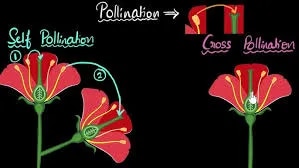
Self &Cross Pownation
Description
Self-pollination and cross-pollination are two main modes of pollination in flowering plants, each with distinct mechanisms and biological outcomes.
Self-Pollination
Definition: Transfer of pollen grains from the anther to the stigma of the same flower, or another flower on the same plant (autogamy or geitonogamy).
Features:
No external agent required.
Maintains genetic uniformity (offspring similar to parent).
Ensures seed set in absence of pollinators; advantageous in stable environments.
Less genetic variability, can lead to inbreeding.
Example plants: pea, wheat, rice, tomato, barley.
Cross-Pollination
Definition: Transfer of pollen grains from the anther of one plant’s flower to the stigma of a flower on another plant of the same species (allogamy).
Features:
Requires external agents (wind, water, insects, birds, animals).
Promotes genetic diversity (offspring genetically different from parents).
Increases adaptability and survival in changing environments.
Reduces risk of inbreeding.
Example plants: apple, daffodil, pumpkin, grasses, cucumber.
Mechanisms to encourage cross-pollination include different timing of pollen and stigma maturity, structural barriers, and unisexual flowers.
Specifications
| Model No. | N-EM0130 |
|---|


