
Tape Worm
Description
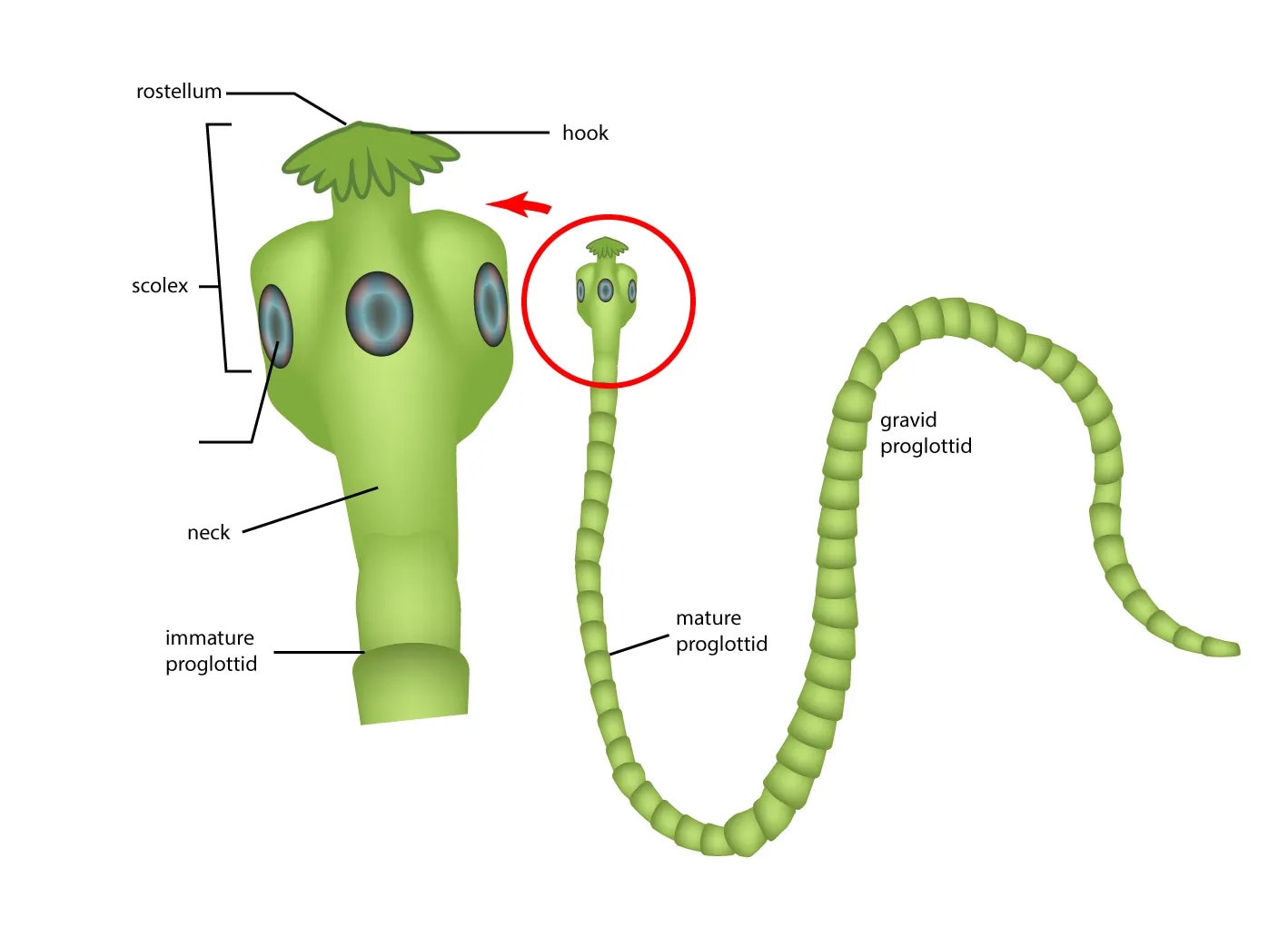
Neck: Just behind the scolex, this short segment is the growth region where new body segments are produced.
Strobila (Body): This long, ribbon-like portion is divided into numerous segments called proglottids, each containing independent reproductive organs.
Proglottids: As proglottids mature—furthest from the neck—they fill with eggs and break off, leaving the host’s body with feces to continue the parasitic lifecycle.
Body Wall: The body is covered by a tough outer tegument (epidermis), allowing absorption of nutrients, excretion, and providing resistance to digestive enzymes.
No Digestive System: All nutrients are absorbed directly from the host's digested food, as tapeworms lack a mouth and gut.
Reproductive Biology
Tapeworms are hermaphroditic, with each proglottid containing male and female reproductive organs; they often self-fertilize.
The life cycle is complex, usually involving multiple hosts and developmental stages (egg, larva, adult). Infection commonly occurs through consumption of undercooked meat containing larval cysts (cysticerci).
Educational Model Features
Tapeworm models clarify external and internal structure: scolex (with hooks/suckers), neck, strobila/proglottids, and reproductive systems.
Models often depict the segmented nature, highlighting egg-filled proglottids and attachment organs crucial for parasitism.
Tapeworm anatomy and life cycle exemplify adaptation to a parasitic mode of life, with specialization for longevity, reproduction, and nutrient absorption in the digestive tract.
Specifications
| Model No. | N-EM090 |
|---|


