Thank you for writing to us. One of our executive will reach back to you through your submitted medium. In case there’s an urgency, feel free to connect over WhatsApp for faster response.
Prefer calling? Dial +918048036175 (International callers) or 08048036175 (Indian callers).
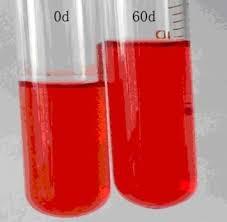
Congo Red indicator solution is an aqueous or ethanolic solution of Congo Red dye (C.I. 22120) that changes color from blue-violet (pH <3.0) to red (pH >5.2), serving as an acid-base indicator for titrations and qualitative pH testing.
Composition and Preparation
Typical formulation: 0.1–1% Congo Red in water/ethanol (e.g., dissolve 0.5 g dye in 50 mL water + 50 mL ethanol; or 1 g in 100 mL water).
Appearance: Reddish-brown to red clear solution.
Properties
pH transition: Blue-violet (acidic, pH 3.0) ⇌ red (alkaline, pH 5.2).
Solubility: Water-soluble; stable but light-sensitive.
Uses
pH indicator in acid-base titrations (inverse of litmus).
Microscopy/histology stain for amyloid, cellulose, and bacteria.
Handling
Store in amber bottles away from light; potential carcinogen—use PPE.
For catalog: “Congo Red indicator solution, 0.1–1% red liquid, pH 3.0 (blue-violet) to 5.2 (red), for titrations/microscopy; light-sensitive.”
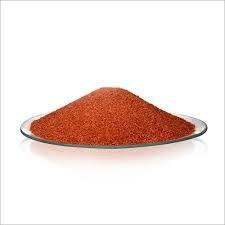
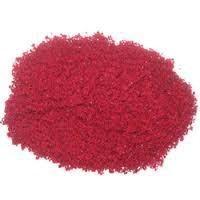
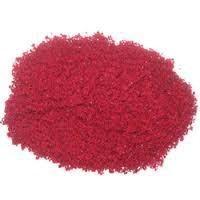
Cobalt sulphate extra pure is a high-purity form of cobalt(II) sulfate heptahydrate (CoSO₄·7H₂O), typically ≥97% assay, supplied as red crystalline powder or small red crystals for laboratory and analytical use.
Identity and Composition
Chemical name: Cobalt(II) sulfate heptahydrate.
Molecular formula: CoSO₄·7H₂O; molecular weight 281.10 g/mol.
Grade specifications: Assay 97–102% (complexometric), Cl ≤0.02%, Pb ≤0.005%, Fe ≤0.005%; Co content 20.3–21.4%.
Physical Properties
Appearance: Red crystalline powder.
Odor: Odorless.
Density: 2.03 g/cm³.
Melting point: 98 °C; boiling point ~735 °C.
Solubility: Highly soluble in water (60.4 g/100 g at 30 °C); slightly soluble in alcohol.
pH: ~4 (solution).
Typical Uses
Extra pure cobalt sulphate serves as a reagent in analytical chemistry, catalyst preparation, electroplating baths, and as a cobalt source in pigments, ceramics, and animal feed supplements.
Handling and Safety
Hazardous (H302, H317, H334, H341, H350i, H360F, H410); harmful if swallowed, skin/respiratory sensitizer, suspected carcinogen/reprotoxin, very toxic to aquatic life. Store sealed; use PPE.
For catalog purposes: “Cobalt sulphate extra pure, CoSO₄·7H₂O ≥97%, red crystals, mp 98 °C, highly water-soluble, for reagents/plating; toxic sensitizer.”
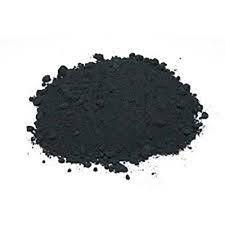
Cobalt oxide extra pure is a high-purity grade of cobalt(II,III) oxide (Co₃O₄), typically with min. 70% Co content, supplied as a black odorless powder for laboratory, catalytic, and pigment applications.
Identity and Composition
Chemical name: Cobalt(II,III) oxide; cobaltosic oxide.
Molecular formula: Co₃O₄; molecular weight 240.80 g/mol.
Grade specifications: Co (by complexometry) min. 70%, Pb max. 0.002%, Ni max. 0.3%, Fe max. 0.1%; spinel structure.
Physical Properties
Appearance: Black powder.
Density: 6.11 g/cm³.
Melting point: 895 °C.
Solubility: Insoluble in water; soluble in acids.
Typical Uses
Extra pure cobalt oxide serves as a catalyst, p-type semiconductor, pigment in ceramics/glazes (blue colors), and precursor in battery materials and electrochemistry.
Handling and Safety
Hazardous (H301, H317, H330, H334, H350i); toxic if swallowed/inhaled, skin/respiratory sensitizer, possible carcinogen, aquatic toxin. Store sealed; use PPE.
For catalog purposes: “Cobalt oxide extra pure, Co₃O₄ (Co min. 70%), black powder, mp 895 °C, insoluble in water, for catalysts/pigments; highly toxic sensitizer.”
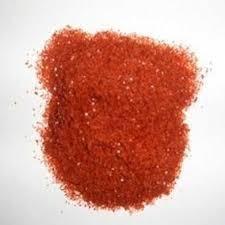
Cobalt nitrate extra pure is a high-purity form of cobalt(II) nitrate hexahydrate (Co(NO₃)₂·6H₂O), typically ≥97–99% assay, appearing as red to pinkish-red hygroscopic crystals used in analytical chemistry, catalysts, and material synthesis.
Identity and Composition
Chemical name: Cobalt(II) nitrate hexahydrate.
Molecular formula: Co(NO₃)₂·6H₂O; molecular weight 291.03 g/mol.
Grade specifications: Assay 97–99%, low impurities (e.g., Cl ≤0.01%, SO₄ ≤0.02%, heavy metals ≤0.002%).
Physical Properties
Appearance: Red crystalline solid, odorless.
Density: 1.88–2.49 g/cm³.
Melting point: 55 °C (loses water); boiling point ~74 °C.
Solubility: Highly soluble in water (134 g/100 mL), ethanol, acetone; pH ~4 (10% solution).
Typical Uses
Extra pure cobalt nitrate acts as a reagent and cobalt source in nanoparticle synthesis, electroplating, pigments, fertilizers, and laboratory analysis.
Handling and Safety
Strong oxidizer (H272); harmful if swallowed (H302), skin sensitizer (H317), causes serious eye damage (H318), respiratory sensitizer (H334), suspected carcinogen/mutagen/reprotoxin (H341, H350i, H360), aquatic toxin (H410). Store sealed away from combustibles; use PPE.
For catalog purposes: “Cobalt nitrate extra pure, Co(NO₃)₂·6H₂O ≥97%, red hygroscopic crystals, mp 55 °C, highly water-soluble, reagent/catalyst; strong oxidizer, toxic sensitizer.”
Cobalt chloride extra pure is a high-purity grade of cobalt(II) chloride hexahydrate (CoCl₂·6H₂O), typically ≥97–99% assay, appearing as red to pink deliquescent crystalline solid widely used in chemical laboratories, electroplating, pigments, and humidity indicators.
Identity and Composition
Chemical name: Cobalt(II) chloride hexahydrate.
Molecular formula: CoCl₂·6H₂O; molecular weight 237.93 g/mol.
Grade specifications: Assay 97–99%, with low chloride and heavy metal impurities; hygroscopic with stable crystalline form.
Physical Properties
Appearance: Red to pink deliquescent crystals or powder.
Odor: Odorless.
Density: Approximately 1.92 g/cm³.
Melting point: About 86 °C (heptahydrate); boiling point ~110 °C.
Solubility: Highly soluble in water and alcohol, forming pink to blue solutions depending on hydration.
Typical Uses
Extra pure cobalt chloride is used as a reagent in chemical analysis, humidity indicator in desiccators, manufacturing pigments, catalysts, and in electroplating baths.
Handling and Safety
Hygroscopic; store sealed and dry. It is harmful if swallowed and inhaled, may cause skin/respiratory sensitization, suspected carcinogen and reproductive toxin. Use PPE and avoid environmental release.
For catalog purposes: “Cobalt chloride extra pure, CoCl₂·6H₂O ≥97%, red deliquescent crystals, mp 86 °C, highly water-soluble, chemical reagent/humidity indicator; toxic sensitizer.”
Cobalt carbonate extra pure, also known as basic cobalt(II) carbonate or cobalt carbonate hydroxide, is a pale purple to pink crystalline powder with high purity used in chemical synthesis, pigments, and catalysts.
Identity and Composition
Chemical name: Basic cobalt(II) carbonate; cobalt carbonate hydroxide.
Molecular formula: CoCO₃ (for cobalt(II) carbonate), often present as basic carbonate Co₂(CO₃)₃·xH₂O.
Molecular weight: Approximately 118.94 g/mol.
Grade specifications: Extra pure with assay typically >98%, insoluble in water and alcohol, soluble in acids.
Physical Properties
Appearance: Pale purple to pink crystalline powder.
Density: Approx. 4.13 g/cm³.
Decomposition: Decomposes on heating rather than melting, releasing CO₂ to form cobalt oxides.
Solubility: Insoluble in water and ethanol; soluble in acids forming cobalt salts.
Typical Uses
Used as a pigment source for ceramics/glazes, precursor for catalysts and cobalt salts, and in materials chemistry for battery and electronics applications.
Handling and Safety
Stable under normal conditions; avoid moisture and incompatible oxidizers. Handle with PPE; harmful if swallowed or inhaled; aquatic toxicant.
For catalog: “Cobalt carbonate extra pure, CoCO₃ pale purple crystalline powder, assay ≥98%, density 4.13 g/cm³, decomposes on heating, insoluble in water; pigment and catalyst precursor.”
Cobalt acetate extra pure is a high-purity form of cobalt(II) acetate tetrahydrate (Co(CH₃COO)₂·4H₂O), typically ≥98.5% assay, supplied as a reddish-pink crystalline powder soluble in water and alcohol for use in catalysis, pigments, and synthesis.
Identity and Composition
Chemical name: Cobalt(II) acetate tetrahydrate.
Molecular formula: C₄H₆O₄Co·4H₂O; molecular weight 249.08 g/mol.
Grade specifications: Assay min. 98.5–99%, low impurities (e.g., Fe ≤0.01%, SO₄ ≤0.01%, Cl ≤0.005%, Pb ≤0.001%, Ni ≤0.1%).
Physical Properties
Appearance: Reddish-pink crystalline powder.
Odor: Acetic acid odor.
Density: 1.71 g/cm³.
Melting point: 140–298 °C; pH 6.8 (0.2 M aqueous solution).
Solubility: Soluble in water and ethanol.
Typical Uses
Extra pure cobalt acetate serves as a catalyst precursor in oxidation reactions (e.g., autoxidation), in electroplating, pigments/ceramics, and as a cobalt source in materials synthesis.
Handling and Safety
Hygroscopic; store sealed in dry conditions. Harmful if swallowed (H302), skin/respiratory sensitizer (H317/H334), suspected mutagen/carcinogen/reprotoxin (H341/H350i/H360F), very toxic to aquatic life (H410). Use PPE.
For catalog purposes: “Cobalt acetate extra pure, Co(CH₃COO)₂·4H₂O ≥98.5%, reddish-pink crystals, density 1.71 g/cm³, water-soluble, catalyst/pigment precursor; toxic sensitizer.”
Clove oil (redistilled) for microscopy is a purified essential oil derived from clove buds (Syzygium aromaticum or Eugenia spp.), redistilled to remove impurities and water, containing ≥87.8% eugenol, used as a clearing agent for botanical and histological sections.
Identity and Composition
Source: Steam-distilled from clove buds, redistilled and dried.
Main component: Eugenol (≥87.8% v/v).
Synonyms: Oil of cloves.
Physical Properties
Appearance: Colorless to pale yellow liquid.
Odor: Characteristic spicy clove aroma.
Refractive index (20°C, 589 nm): 1.5300–1.5310.
Optical rotation: -1.5° to 0°.
Solubility: Insoluble in water; miscible with alcohol, ether, fixed oils.
Typical Uses
Redistilled clove oil clears plant tissues (e.g., leaves, stems) by removing chlorophyll and rendering sections transparent for microscopic examination of internal structures like vascular bundles.
Handling and Safety
Store in amber bottles away from light/heat. Irritant (H315, H319, H335); causes skin/eye irritation and respiratory discomfort. Use gloves/ventilation.
For catalog purposes: “Clove oil (redistilled) for microscopy, ≥87.8% eugenol, pale yellow liquid, RI 1.530–1.531, clearing agent for botanical sections; irritant.”
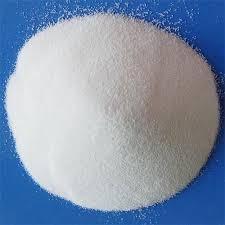
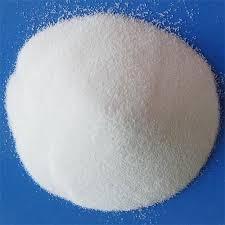
Citric Acid Monohydrate is a white or colorless crystalline powder or crystals with a strongly acidic taste. Chemically, it is a tricarboxylic acid with the formula C6H8O7·H2O, naturally found in citrus fruits. It is highly soluble in water and freely soluble in ethanol, and it possesses low reactivity and good chemical stability at ambient temperatures.
It is widely used as an acidulant, flavor enhancer, preservative, and chelating agent in food, pharmaceutical, cosmetic, and chemical industries. It functions as an acidification agent, buffering agent, chelating agent, pH regulator, and stabilizer. Citric Acid Monohydrate is non-toxic, biodegradable, and commonly used in pharmaceutical preparations due to its antioxidant properties, maintaining the stability of active ingredients. It also acts to control pH and can chelate calcium in blood, serving as an anticoagulant. The compound exists as a monohydrate, meaning it contains one molecule of water per molecule of citric acid.
Citric Acid Anhydrous is a white or colorless crystalline powder or crystals with a sharp acidic taste. Its chemical formula is C6H8O7, and it has a molecular weight of about 192.12 g/mol. It is known for being odorless or nearly odorless and highly soluble in water (about 134 g per 100 g of water) and ethanol. Citric Acid Anhydrous has a melting point around 153 °C and decomposes upon heating above this temperature.
It is a naturally occurring tricarboxylic acid present in citrus fruits and widely used as an acidulant, preservative, chelating agent, pH regulator, and antioxidant in food, pharmaceutical, and personal care industries. Compared to the monohydrate form, the anhydrous form is more suitable where moisture sensitivity is critical, such as in dry mixes and powdered products. It has excellent chelating properties that help stabilize emulsions and inhibit oxidation and microbial growth.
Physically, it appears as colorless crystals or a white crystalline powder and is stable under normal conditions but hygroscopic, tending to absorb moisture from the air slowly over time. It is also used as an excipient in pharmaceuticals for its antioxidant and pH buffering properties.
In summary, Citric Acid Anhydrous is a moisture-sensitive, water-soluble, white crystalline acid widely used for its acidifying, chelating, and preservative functions, especially in formulations sensitive to water content.
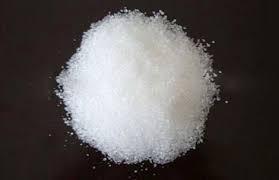
Cinnamic Acid is an organic compound with the chemical formula C9H8O2. It is a white crystalline solid, slightly soluble in water but freely soluble in many organic solvents. Structurally, it consists of an acrylic acid group with a phenyl substituent at the 3-position, making it a monocarboxylic acid. It exists mainly in two isomeric forms, trans-cinnamic acid (the more common) and cis-cinnamic acid.
Physically, cinnamic acid appears as white to off-white monoclinic crystals with a melting point around 133-136 °C and a boiling point near 300 °C (where it decomposes). It has a density of about 1.247 g/cm³ and a characteristic honey-like odor. Cinnamic acid is naturally found in cinnamon oil, shea butter, and other plant sources.
Functionally, cinnamic acid is widely used in the production of flavorings, synthetic indigo, pharmaceuticals, and as a precursor in organic synthesis. Its molecular weight is approximately 148.16 g/mol, and it has a pKa around 4.44, reflecting its acidic nature. The compound is notable for its aromatic properties and its role in various chemical and industrial applications.
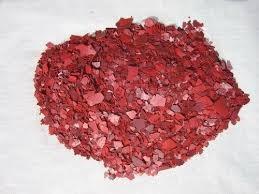
Chromium trioxide, also known as chromic anhydride or chromium(VI) oxide, is an inorganic compound with the formula CrO₃. It appears as dark-red or purple odorless flakes, powder, or crystals, with a molecular weight of 99.99 g/mol and density of 2.7 g/cm³. The solid structure consists of chains of tetrahedrally coordinated chromium atoms sharing vertices, with each Cr(VI) center bonded to three oxygen atoms.
It has a melting point of 197°C and decomposes above 250°C into Cr₂O₃ and oxygen. Chromium trioxide is sparingly soluble in water (hydrolyzing to chromic acid, H₂CrO₄), soluble in acids and acetone, and acts as a powerful oxidizer, reacting violently with organic materials. 'Extra pure' grade indicates high purity for laboratory use, minimizing impurities for precise applications.
Widely used in chrome electroplating, organic synthesis as an oxidant, and pigment production, it is highly toxic, mutagenic, and carcinogenic, requiring strict handling precautions. It is produced industrially by acidifying sodium chromate.