Thank you for writing to us. One of our executive will reach back to you through your submitted medium. In case there’s an urgency, feel free to connect over WhatsApp for faster response.
Prefer calling? Dial +918048036175 (International callers) or 08048036175 (Indian callers).
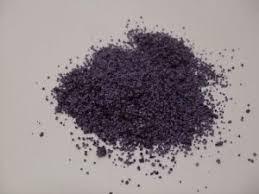
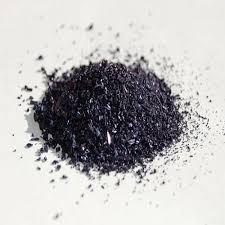
Chromium sulphite, more commonly referred to as chromium(III) sulfate, has the chemical formula Cr2(SO4)3. It is an inorganic compound consisting of chromium ions in the +3 oxidation state coordinated with sulfate ions. The compound typically appears as violet or bluish-gray crystalline solid and may exist in hydrated forms.
Chromium(III) sulfate is sparingly soluble in water and soluble in acids and alkalis. It has a molar mass of about 392 g/mol (anhydrous form) and a density around 2.04 to 3.1 g/cm³ depending on hydration. The crystalline structure features chromium ions coordinated octahedrally, forming stable complexes with sulfate as a bidentate ligand. It is stable, with a melting point near 90-92 °C and decomposes upon boiling.
This compound finds use in tanning leather, pigment production, and as a chemical intermediate. Chromium(III) sulfate is less toxic than hexavalent chromium compounds but should still be handled with care due to chromium's potential health effects.
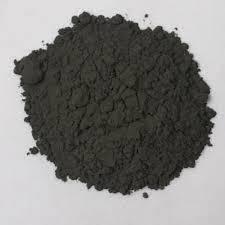
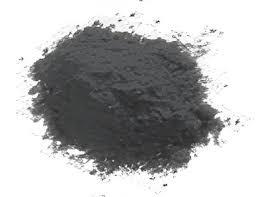
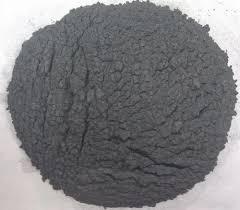
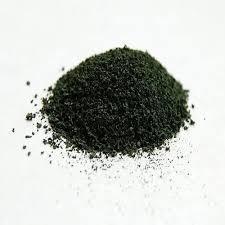
Chromium sulfide, primarily chromium(III) sulfide with the formula Cr₂S₃, is an inorganic compound appearing as a brown-black hexagonal crystalline solid. It has a molecular weight of 200.19 g/mol and a density of about 3.77 g/cm³. The structure combines features of nickel arsenide (1:1 stoichiometry) and Cd(OH)₂ (1:2 stoichiometry), with short Cr-Cr distances indicating metal-metal bonding, and exists in nonstoichiometric forms ranging from CrS to Cr₀.₆₇S.
It is insoluble in water, decomposing in it, and has a melting point around 1350°C. Chromium sulfide exhibits typical transition metal sulfide properties, including low solubility and stability, though it may react under specific conditions. Other forms like CrS (chromium(II) sulfide) exist but are less common.
Used in ceramics, pigments, and as a semiconductor material, it requires careful handling due to potential toxicity from chromium compounds.
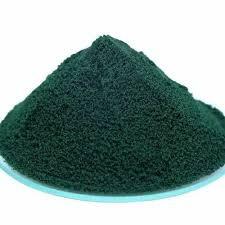
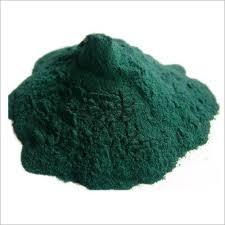
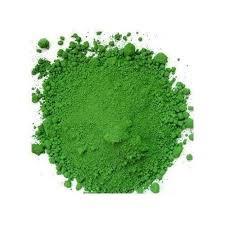
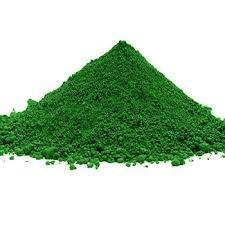
Chromium sulphate basic, also known as basic chromium(III) sulfate, is a partially hydrolyzed form of chromium(III) sulfate with the general formula Cr(OH)SO₄ or similar hydrated variants like [Cr(H₂O)₆]³⁺ complexes. It appears as a green crystalline powder, soluble in water, with a pH range of 1.5-2.5 and melting point around 90°C.
This compound features chromium in the +3 oxidation state, making it less toxic than hexavalent forms, and it forms stable octahedral complexes with sulfate and hydroxide ligands. It is hygroscopic, odorless, and used primarily in leather tanning to fix dyes, improve colorfastness, and as a wood preservative.
Produced by reacting chromium(III) oxide or hydroxide with sulfuric acid, it serves as a key intermediate in industrial applications requiring controlled chromium delivery
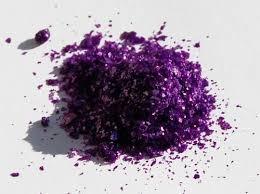
Chromium potassium sulphate extra pure, also known as chrome alum or chromium(III) potassium sulfate dodecahydrate, has the formula KCr(SO₄)₂·12H₂O. It appears as violet or red-violet crystalline powder or crystals, odorless, with a molecular weight of 499.40 g/mol, density of 1.83 g/cm³, and melting point around 89°C. The 'extra pure' grade meets high analytical standards (e.g., assay 99-102% by iodometry, low impurities like Cl ≤0.002%, heavy metals ≤0.01%) for laboratory use.
It is highly soluble in water, efflorescent (loses water upon exposure to air), and forms octahedral [Cr(H₂O)₆]³⁺ complexes. Produced by reducing potassium dichromate with SO₂ in sulfuric acid or from ferrochromium, it exhibits low pH (around 3 in solution) and is stable under normal conditions but incompatible with strong reducers.
Commonly used in leather tanning (chrome-tan liquors), as a mordant in textile dyeing, in photography fixing baths, and ceramics. It is irritant (skin/eye) and toxic by ingestion, requiring handling with gloves and eye protection
Chromium phosphate extra pure refers to high-purity chromium(III) phosphate (CrPO₄), an inorganic compound appearing as green or blue orthorhombic crystals or powder. It has a molecular weight of 146.97 g/mol, density of 4.236 g/cm³ (or ~2.12 g/mL at 25°C), and decomposes at 120-140°C without melting. The 'extra pure' grade ensures minimal impurities for analytical and laboratory applications, with low solubility in water and acids.
Structurally, it features infinite chains of edge-sharing CrO₆ octahedra linked by PO₄ tetrahedra in its β-isoform (orthorhombic Cmcm space group), transitioning to α-CrPO₄ above 1175°C. Hydrated forms like CrPO₄·6H₂O (violet) exist, prepared by reducing Cr(VI) compounds with hydrazine or ethanol in phosphoric acid.
It exhibits antiferromagnetic properties at low temperatures and acts as a cation exchanger. Used in ceramics, pigments, and as a catalyst precursor, it is irritant and requires protective handling due to chromium toxicity.
Chromium oxalate extra pure is a high-purity inorganic compound with the formula CrC2O4. It typically appears as light green to yellow-green crystalline powder or crystals. The compound has a molecular weight of about 140 g/mol and a density around 2.46 g/cm³. It is practically insoluble in cold water but soluble in hot water and dilute acids. The melting point is very high, approximately 1900°C, and it decomposes on heating, converting to chromium oxide.
Chromium oxalate is used as an analytical reagent, reducing agent, and in catalyst development. It is typically prepared by reacting chromium salts with oxalic acid. It is toxic and an irritant, requiring careful handling. The 'extra pure' designation indicates the product meets stringent purity standards with minimal impurities for sensitive laboratory or industrial use.
Chromium nitrite as a distinct compound is not common; instead, the terms more commonly encountered are chromium nitride (CrN) or chromium nitrate (Cr(NO3)3).
Chromium nitride (CrN) is an interstitial compound where nitrogen atoms occupy octahedral sites in the chromium metal lattice, forming a hexagonal crystal structure. It is an extremely hard, corrosion-resistant material used primarily as a coating for durability and wear resistance in industrial applications. Chromium nitride does not contain nitrite ions and is not a typical chromium(III) compound.
If you mean chromium nitrate, it is an inorganic compound usually appearing as blue-violet crystals with the formula Cr(NO3)3 or hydrated forms such as Cr(NO3)3·6H2O. It serves as a catalyst and precursor for various chromium compounds in dyeing, coatings, and chemical synthesis. Chromium nitrate forms octahedral complexes coordinated by water and nitrate ligands.
Please specify if you meant nitride or nitrate for more precise information.
Chromium nitrate, specifically chromium(III) nitrate, has the chemical formula Cr(NO₃)₃ for the anhydrous form and commonly exists as the nonahydrate Cr(H₂O)₆₃·3H₂O. It appears as blue-violet or purple crystalline solids, odorless, with a density of about 1.85 g/cm³, molar mass of 238.01 g/mol (anhydrous) or 400.21 g/mol (nonahydrate), melting point around 60°C (nonahydrate), and decomposes above 100°C.
Structurally, it features a central Cr³⁺ ion octahedrally coordinated by six water ligands in [Cr(H₂O)₆]³⁺ complexes, with nitrate anions and additional water molecules of crystallization occupying the lattice. It is highly soluble in water, forming acidic solutions, and acts as a strong oxidizing agent, reacting with reducers like zinc to displace chromium metal.
Used as a catalyst precursor, in metal pickling, dyeing, and chrome tanning, it requires careful handling due to its irritant nature, potential to ignite organics, and chromium toxicity.
Chromium hydroxide extra pure refers to high-purity chromium(III) hydroxide, Cr(OH)₃, a gelatinous green inorganic compound used in analytical and laboratory applications. It appears as a green precipitate or powder with low solubility in water, acting as an amphoteric substance that dissolves in strong acids to form [Cr(H₂O)₆]³⁺ or in strong alkalis to form chromite ions, CrO₂⁻.
The compound has an undefined polymeric structure and is prepared by adding ammonium hydroxide to a chromium(III) salt solution. 'Extra pure' grades minimize impurities for precise uses like pigments, mordants, and catalysts in organic reactions.
It decomposes on heating to chromium(III) oxide and is irritant, requiring protective handling due to chromium toxicity.
Chromium fluoride primarily refers to chromium(III) fluoride (CrF3), an inorganic compound appearing as a green crystalline solid. It forms several hydrates, such as violet [Cr(H2O)6]F3 and green [Cr(H2O)6]F3·3H2O, which are soluble in water, whereas the anhydrous CrF3 is insoluble. The anhydrous form melts above 1100°C and sublimes between 1100 and 1200°C, with a rhombohedral crystal structure. Chromium(III) fluoride is paramagnetic and features octahedral coordination of chromium by fluoride ligands, which bridge adjacent chromium centers.
It is prepared by reactions involving chromium(III) oxide with hydrofluoric acid or chromium chloride with hydrogen fluoride. Due to its fluoride content, it is corrosive to metals and tissues and reacts with water slowly to release hydrofluoric acid, which is highly toxic and can cause severe chemical burns. It finds use in printing, dyeing, metal fluorides synthesis, and as a catalyst.
Other related chromium fluorides include chromium(V) fluoride (CrF5) and chromyl fluoride (CrO2F2), which are different compounds with distinct properties.
Chromium chloride extra pure refers to high-purity chromium(III) chloride (CrCl₃), an inorganic compound available as anhydrous violet crystals or hydrates like the dark green hexahydrate CrCl₃·6H₂O. It has a molecular weight of 158.36 g/mol (anhydrous), density of 2.87 g/cm³, melting point of 1152°C, and decomposes at 1300°C. The crystal structure is layered rhombohedral (YCl₃ type), with Cr³⁺ in octahedral sites amid Cl⁻ close-packed layers, enabling easy cleavage into flakes.
Anhydrous CrCl₃ is sparingly soluble in water but dissolves rapidly with reducing agents like Cr²⁺ or Zn, forming violet or green solutions due to hydration isomers such as [Cr(H₂O)₆]Cl₃ or [CrCl(H₂O)₅]Cl₂·H₂O. 'Extra pure' grades (e.g., 99.99% trace metals basis) minimize impurities for analytical, catalytic, and pigment applications.
It acts as a Lewis acid catalyst in organic synthesis, precursor for pigments, and in chrome tanning. Highly corrosive, hygroscopic, and toxic (irritant to skin/eyes, potential chromium sensitizer), it requires gloves, ventilation, and incompatibility avoidance with strong oxidizers or reducers.
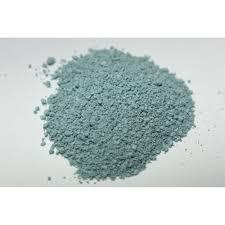
Chromium carbonate, typically chromium(III) carbonate with the formula Cr₂(CO₃)₃, is an inorganic compound appearing as a bluish-green amorphous powder. It has a molecular weight of approximately 284 g/mol and is insoluble in water, decomposing upon heating to chromium(III) oxide and carbon dioxide. The compound features chromium in the +3 oxidation state coordinated with carbonate ligands.
Structurally, it exists as a basic or hydrated salt rather than a simple neutral carbonate due to stability issues, often represented as Cr₂(CO₃)₃ or related forms. It is prepared by reacting chromium salts with carbonates under controlled conditions and exhibits light blue to green hues in pure forms.
Used in the preparation of chromic salts, pigments, and as a precursor in chromium chemistry, it requires careful handling due to chromium toxicity and irritant properties.