Thank you for writing to us. One of our executive will reach back to you through your submitted medium. In case there’s an urgency, feel free to connect over WhatsApp for faster response.
Prefer calling? Dial +918048036175 (International callers) or 08048036175 (Indian callers).
Cresol Red indicator solution is a dark red, aqueous acid-base indicator solution used primarily in titrations and pH measurements. The solution typically contains cresol red dye (o-cresolsulfonphthalein) dissolved in water or a water-alcohol mixture, and it exhibits color changes in specific pH ranges.
Properties
Appearance: Dark red clear solution.
pH transition ranges:
Acidic range (pH 0.5–2.5): color changes from pink brownish to yellow.
Alkaline range (pH 6.5–8.5): color changes from yellow to purple.
Dye content in indicator grade is often about 95% purity.
Solubility: Miscible with water and soluble in ethanol or dilute acids and alkalis).
Uses
Widely used as a pH indicator in acid-base titrations due to distinct color changes.
Useful in diagnostic assays and scientific research involving pH measurements or monitoring.
Employed in chemical manufacturing and analytical laboratories to visually detect pH shifts across moderate acidic and alkaline ranges.
Storage and Handling
Store at room temperature in a tightly sealed container, protected from light to prevent dye degradation.
Handle with care as the dye may cause skin or eye irritation.
For catalog description: “Cresol Red indicator solution, dark red clear liquid, pH range 0.5–2.5 (pink to yellow) and 6.5–8.5 (yellow to purple), dye content ~95%, used for pH determination in titrations and assays.”
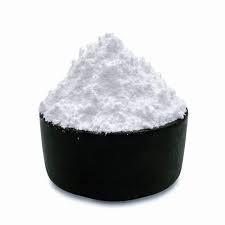
Cream of tartar extra pure is a high-purity grade of potassium bitartrate (potassium hydrogen tartrate, KC₄H₅O₆), appearing as a white crystalline powder or colorless crystals, used as a reagent in analytical chemistry, buffering, and food applications.
Identity and Composition
Chemical name: Potassium bitartrate; monopotassium L-tartrate.
Molecular formula: KC₄H₅O₆; molecular weight 188.18 g/mol.
Grade specifications: Extra pure with assay 99.0–101% (dry basis), loss on drying ≤0.5%, minimal impurities (e.g., chloride ≤0.05%, sulfate ≤0.05%, heavy metals ≤10 ppm).
Physical Properties
Appearance: White crystalline powder, odorless.
Density: 1.954 g/mL at 25 °C.
Melting point: 267 °C (decomposes).
Solubility: Slightly soluble in water (0.54 g/100 mL at 20 °C, 6.50 g/100 mL at 100 °C); soluble in dilute acids/alkalis; insoluble in alcohol.
pH: 3.4–3.7 (saturated solution at 20 °C).
Typical Uses
Extra pure cream of tartar functions as a buffering agent, reducing agent in volumetric analysis, leavening agent in baking, and stabilizer in winemaking to prevent tartrate precipitation.
Handling and Safety
Hygroscopic; store in airtight containers at room temperature. Non-toxic in food use (E336), but avoid inhalation of dust; incompatible with strong oxidizers.
For catalog purposes: “Cream of tartar extra pure, KC₄H₅O₆ 99–101%, white crystals, mp 267 °C (dec.), slightly water-soluble, for analysis/baking; hygroscopic.”
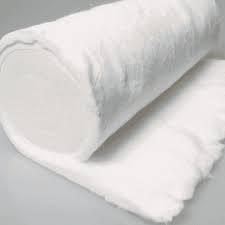
Cotton wool, absorbent white, is a high-quality, purified, bleached, and carded cotton material designed for medical, laboratory, and personal hygiene use. It is characterized by its soft, fluffy texture and excellent absorbency, making it ideal for wound dressing, skin disinfection, and fluid absorption.
Specifications and Properties
Material: 100% cotton, free from impurities, bleached and purified to be chemically inert and non-irritant.
Appearance: White, soft, elastic fibers with average staple length of 10 mm or more.
Absorbency: High water-holding capacity, typically retaining at least 23 g of water per gram of cotton; sinking time max 10 seconds.
pH: Neutral to slightly acidic (approx. 6.5 to 7.5 in aqueous extract).
Purity: Low levels of coloring matter and water/ether soluble substances (both ≤0.5%).
Uses
Surgical dressings and wound care due to its absorbency and softness.
Laboratory applications for sample collection and cleaning.
Personal hygiene and cosmetic uses.
Packaging
Typically supplied in rolls or pre-cut portions of varying weights (e.g., 50g, 100g, 250g, 500g).
Quality Control
Must comply with relevant pharmacopoeial and national standards (e.g., Indian Pharmacopoeia, IS 16468).
Tested for fiber identification, foreign matter, moisture content, fluorescence under UV, and absorbency capacity.
For catalog description: “Cotton wool absorbent white, 100% purified and bleached cotton fibers, soft and elastic, high absorbency (≥23 g water/g), surgical and laboratory grade, hygienic and non-irritant.”
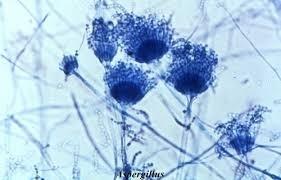
Cotton blue-lactophenol, also known as Lactophenol Cotton Blue (LPCB), is a staining and mounting solution for microscopic identification of fungi, where cotton blue (aniline blue or methyl blue) stains fungal cell walls blue, while lactophenol preserves structures.
Composition (Typical 100 mL Preparation)
Cotton blue (aniline blue): 0.05–0.125 g.
Phenol crystals: 20–25 g (disinfectant).
Lactic acid: 20–50 mL (preservative).
Glycerol: 40–100 mL (mountant).
Distilled water: 20–50 mL.
Preparation Protocol
Dissolve cotton blue in distilled water; let stand overnight to settle insoluble dye.
Dissolve phenol crystals in lactic acid (use gloves); add glycerol and stir.
Filter the blue solution into the phenol mixture; mix and store at room temperature (matures 1–2 days).
Properties and Uses
Appearance: Clear blue solution.
Staining: Fungal hyphae, spores, and structures stain deep blue against pale blue background.
Applications: Wet mounts for fungal microscopy in mycology; kills, preserves, and stains in one step.
Handling
Light-stable but phenol-toxic; store sealed at RT. Use PPE; for lab use only.
For catalog: “Cotton blue-lactophenol (LPCB), blue fungal stain/mountant, phenol-lactic acid-glycerol-aniline blue, for hyphae/spore microscopy; deep blue stain.”
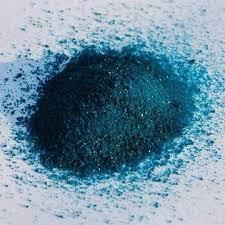
Cotton Blue is a water-soluble biological stain, also known as aniline blue (water-soluble), appearing as a dark blue to dark brown powder used primarily for staining fungal cell walls (chitin/cellulose) and collagen fibers in microscopy.
Identity and Composition
Chemical name: Aniline blue (cotton blue, water-soluble; CI 42755).
Molecular formula: Complex triarylmethane dye mixture, typically C₃₁H₂₇N₃Na₂O₉S₃ or similar; molecular weight ~737 g/mol.
Grade specifications: Microscopy grade with absorption maxima 595–610 nm, ratio λmax.P ±15 nm 1.00–1.03, soluble in water.
Physical Properties
Appearance: Dark blue/black powder or crystals, odorless.
Solubility: Soluble in water; often prepared as 2.5% solution in 2% acetic acid or used in Lactophenol Cotton Blue mounts.
Stability: Light-sensitive in solution; store powder in dark.
Typical Uses
Fungal microscopy: Stains hyphae, spores, and structures blue in Lactophenol Cotton Blue (LPCB) mounts.
Histology: Collagen blue in Masson's trichrome stain; cellulose walls and chromosomes in plant tissues.
Other: Paper/textile dyes, fluorescence microscopy with KOH.
For catalog purposes: “Cotton Blue (aniline blue water-soluble), dark blue powder, microscopy grade, λmax 595–610 nm, for fungal/collagen staining; water-soluble.”
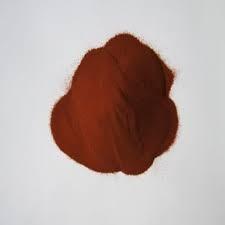
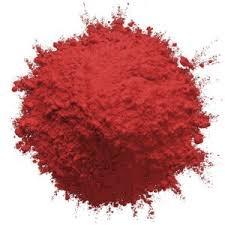
Copper Oxide Red, also known as cuprous oxide or copper(I) oxide (Cu₂O), is a red to reddish-brown crystalline powder used in ceramics, antifouling paints, and pyrotechnics. It is the reduced form of black copper(II) oxide (CuO), converting to CuO in oxidizing conditions.
Identity and Composition
Chemical name: Copper(I) oxide; cuprous oxide.
Molecular formula: Cu₂O; molecular weight 143.09 g/mol.
Grade specifications: Typically 96–99% purity, fine powder with particle size influencing color (yellowish for smaller particles).
Physical Properties
Appearance: Red, yellow, or brown solid (polycrystalline).
Density: 5.75–6.0 g/cm³.
Melting point: 1232 °C; boiling point: 1800 °C.
Solubility: Insoluble in water; soluble in ammonia, acids (HCl, H₂SO₄, HNO₃).
Typical Uses
Antifouling paints for marine applications.
Pigment in ceramics/glazes (green colors in oxidation), glass, and enamels.
Catalyst, semiconductor, antifungicide, and pyrotechnics for red flames.
Handling and Safety
Stable in dry air but oxidizes in moist air to CuO; toxic if inhaled/swallowed, irritant. Store sealed away from acids/reductants.
For catalog purposes: “Copper Oxide Red (Cu₂O), 96–99%, red crystalline powder, mp 1232 °C, insoluble in water, for paints/ceramics; oxidizes in moist air.”
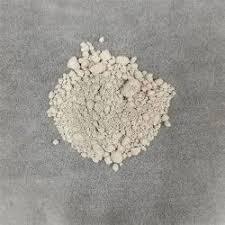
Copper(I) iodide, commonly known as Copper Iodide (CuI), is a white to light gray or tan crystalline powder (may appear reddish-brown due to impurities), used as a catalyst in organic synthesis and in cloud seeding applications.
Identity and Composition
Chemical name: Copper(I) iodide; cuprous iodide.
Molecular formula: CuI; molecular weight 190.45 g/mol.
Grade specifications: Purum or analytical grades ≥98–99.9% purity, low impurities (e.g., sulfate ≤5000 ppm, Fe ≤50 ppm).
Physical Properties
Appearance: White/light gray powder (tan/reddish with impurities).
Density: 5.62–5.67 g/cm³.
Melting point: 605–606 °C; boiling point ~1290–2354 °F.
Solubility: Poorly soluble in water; soluble in ammonia, KI solutions, acetonitrile; polymorphic (zinc blende γ-form at RT).
Typical Uses
Catalyst in organic reactions (Ullmann, Sonogashira coupling, C-C bond formation).
Cloud seeding for rainfall enhancement; semiconductor (p-type).
Synthesis of Cu(I) complexes and in feed additives.
Handling and Safety
Weak redox properties; stable but discolors on oxidation to I₂. Harmful if swallowed/inhaled, irritant; store sealed, away from oxidizers.
For catalog purposes: “Copper Iodide (CuI) ≥99%, white/light gray powder, mp 606 °C, poorly water-soluble, catalyst for organic synthesis; light-sensitive.”
Copper fluoride typically refers to copper(II) fluoride (CuF₂, cupric fluoride), a white to light gray hygroscopic crystalline powder with a monoclinic crystal structure, used in fluorination reactions and ceramics. Copper(I) fluoride (CuF) is less common and unstable.
Identity and Composition
Chemical name: Copper(II) fluoride (cupric fluoride).
Molecular formula: CuF₂; molecular weight 101.54 g/mol.
Grade specifications: ≥98% purity, low loss on drying (<0.5% at 105 °C).
Physical Properties
Appearance: White/light gray powder.
Density: 4.23 g/cm³ at 25 °C.
Melting point: 950 °C (decomposes).
Solubility: Slightly soluble in water (hydrolyzes in hot water); soluble in dilute acids.
Typical Uses
Cupric fluoride acts as a fluorinating agent for aromatic hydrocarbons, catalyst in organic synthesis, and in ceramics/enamels; dihydrate form (blue) used similarly.
Handling and Safety
Highly toxic, corrosive (releases HF with acids); irritant to skin/eyes/respiratory system. Use fume hood, PPE; store dry and sealed.
For catalog purposes: “Copper fluoride (CuF₂) ≥98%, white hygroscopic powder, mp 950 °C (dec.), slightly water-soluble, fluorinating agent; toxic/corrosive.”
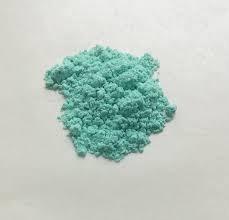
Copper acetate extra pure, chemically copper(II) acetate, is typically available as a blue-green crystalline powder or hydrated crystals (Cu(CH3COO)2·H2O) with high purity (≥98-99.99%), used as a catalyst in organic synthesis and as a reagent in various industrial applications.
Identity and Composition
Chemical name: Copper(II) acetate; cupric acetate.
Molecular formula: Cu(CH3COO)2 (anhydrous); Cu(CH3COO)2·H2O (monohydrate).
Molecular weight: Approximately 183.65 g/mol (anhydrous), 199.65 g/mol (monohydrate).
Appearance: Bluish-green crystalline solid or powder.
Purity: Extra pure grades typically offer 99.99% or higher purity with low heavy metals and trace impurities.
Physical Properties
Solubility: Soluble in water and alcohol; slightly soluble in ether and glycerol.
Melting point: Approx. 116 °C for the monohydrate form.
Typical Uses
Catalyst in organic reactions such as oxidation and C–H amination.
Precursor for copper oxide and other copper-based materials.
Used in electroplating, wood preservatives, and as fungicides.
Handling and Safety
Stable under normal conditions but should be stored in a cool, dry place. It is toxic and an irritant—handle with appropriate safety precautions.
For catalog description: “Copper acetate extra pure, Cu(CH3COO)2·H2O, bluish-green crystalline powder, ≥99.99% purity, soluble in water/alcohol, catalyst and reagent for organic synthesis and material prep; toxic irritant.”
Copper (metal) turning refers to the small chips, swarf, or shavings produced when copper is machined or turned on a lathe or milling machine. These turnings are typically soft, ductile, and have a bright reddish-gold color characteristic of copper metal.
Characteristics
Appearance: Bright metallic reddish-orange or reddish-gold small curls, chips, or shavings.
Texture: Soft, malleable, and ductile with smooth edges due to copper’s excellent machinability.
Size/Shape: Usually fine curls or spiral chips formed during precision machining or shaping.
Machining: Produced in subtractive manufacturing processes like turning, milling, or drilling copper or copper alloys.
Uses and Handling
Recycling: Copper turnings are valuable scrap often collected for recycling and remelting.
Industrial: May be used in non-ferrous metal recovery and remanufacturing.
Handling: Should be collected to avoid safety hazards; can cause skin irritation or metal dust inhalation risks if not managed properly.
Copper turnings are a common byproduct in metalworking shops working with copper components, electrical contacts, and precision parts.[web:general knowledge]
Copper (metal) powder is high-purity elemental copper (Cu) in fine particulate form, typically ≥98–99.9% purity, available as reddish-brown dendritic, spherical, or irregular particles for powder metallurgy, electronics, and chemical applications.
Identity and Composition
Chemical name: Copper metal powder.
Atomic number/molecular weight: 29 / 63.55 g/mol.
Grade specifications: Cu min 98–99.9%, acid insoluble ≤0.1–0.3%, hydrogen loss (oxygen content) 0.1–0.5%; particle size -45 to -325 mesh (e.g., 90% <45 μm).
Physical Properties
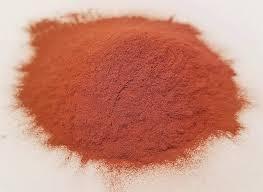
Appearance: Reddish-brown powder.
Density: 8.94 g/cm³ (bulk); apparent density 1.5–4.9 g/cm³ depending on production method.
Melting point: 1083 °C; boiling point: 2595 °C.
Solubility: Insoluble in water; high thermal/electrical conductivity.
Typical Uses
Powder metallurgy for bearings, bushings, friction materials.
Electronics (conductive inks, pastes), 3D printing/additive manufacturing.
Catalysts, antifouling paints, and chemical reductions.
Handling and Safety
Flammable solid (UN3089); pyrophoric in fine form—avoid ignition sources, store under inert atmosphere. Irritant dust; use PPE.
For catalog purposes: “Copper metal powder, Cu ≥99%, reddish-brown, apparent density 2–4 g/cm³, -325 mesh, for metallurgy/electronics; flammable.”
Congo Red pH indicator is a brownish-red powder or paper strip that undergoes a distinct color change from blue-violet (pH <3.0) to red-orange (pH >5.2), making it suitable for detecting acidic conditions in titrations and qualitative pH monitoring.
Identity and Composition
Chemical name: Congo Red (sodium salt of benzidinediazo-bis-1-naphthol-4-sulfonic acid); CI 22120.
Molecular formula: C₃₂H₂₂N₆Na₂O₆S₂; molecular weight 696.65 g/mol.
Form: Powder (soluble in water: 1 g/30 mL) or impregnated paper rolls.
Physical Properties
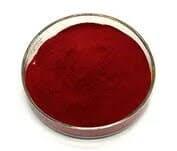
Appearance: Brownish-red odorless powder; pH of 1% solution 8.5–9.0.
Transition range: Blue-violet (pH 3.0) ⇌ red (pH 5.2).
Stability: Aggregates in high concentration/salinity/low pH; light-sensitive in solution.
Typical Uses
Acid-base indicator paper/ solution for qualitative pH testing (inverse of litmus).
Histology stain for amyloid (apple-green birefringence), plant/fungal cell walls, Gram-negative bacteria.
Textile/paper dye, biological stain.
Handling and Safety
Store sealed, protected from light/moisture. Potential carcinogen (azo dye); irritant—use PPE.
For catalog: “Congo Red pH indicator, brownish-red powder, pH 3.0 (blue-violet) to 5.2 (red), water-soluble, for acid detection/titrations; microscopy stain.”