Thank you for writing to us. One of our executive will reach back to you through your submitted medium. In case there’s an urgency, feel free to connect over WhatsApp for faster response.
Prefer calling? Dial +918048036175 (International callers) or 08048036175 (Indian callers).
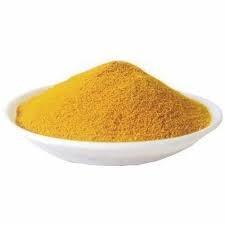
Dextrin yellow (yellow dextrin) is a partially hydrolysed, roasted starch product that appears as a yellow to light brown, free‑flowing, water‑soluble powder with low to medium viscosity and a slightly sweet to neutral taste. It is produced by controlled heat and often acid treatment of starch (typically corn, potato, wheat or tapioca), which shortens the starch chains and imparts the characteristic yellow colour and strong adhesive properties.
Key properties
Physical form: Yellow to light brown hygroscopic powder; completely soluble in water forming a viscous solution.
Chemistry: Mixture of low‑molecular‑weight polysaccharides (dextrins) derived from starch; biodegradable and generally non‑toxic.
Functional traits: Strong adhesive/binding capacity, film‑forming, mild thickening, good compatibility with cellulosic materials (paper, textiles, biomass).
Major industrial uses
Adhesives and paper/packaging:
Water‑soluble glue for envelopes, labels, stamps, gummed tapes, paper tubes, corrugated cartons and general paper/carton lamination.
Binder in paper and board coatings and in printing applications such as batik resist pastes and gouache paints.
Foundry and mining:
Binder and green‑strength additive for sand molds and cores in metal casting; improves dry strength while remaining water‑soluble for easy shake‑out.
Additive in froth flotation processes in mining to modify surface properties and aid separation.
Textiles, leather, and coatings:
Sizing and finishing agent to impart stiffness and better handle to fabrics; thickener in textile printing pastes.
Binder in leather and paint formulations, including gouache and certain water‑based coatings.
Other applications:
Binder in briquetted biomass and fuel pellets to improve mechanical strength and reduce breakage while remaining combustion‑neutral.
Component in some food, pharmaceutical, and cosmetic formulations (where food/pharma grade), acting as a mild thickener, stabilizer, or tablet binder, although white dextrin is more common for food use.
For your catalog, you can describe dextrin yellow as a water‑soluble, roasted starch‑based adhesive/binder powder used mainly in paper/packaging, foundry cores, briquette binding, textiles, and printing, emphasizing its strong bonding, biodegradability, and ease of handling.
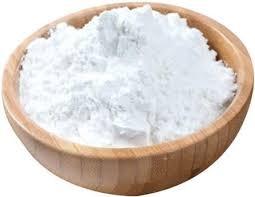
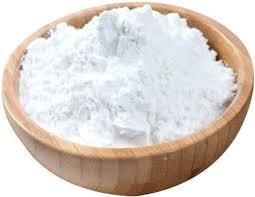
White dextrin is a type of dextrin produced by the partial hydrolysis of starch under controlled conditions of heat and acid, but with milder treatment compared to yellow dextrin. It appears as a white, odorless, water-soluble powder with low viscosity and excellent adhesive and thickening properties. Chemically, white dextrin consists of low-molecular-weight polysaccharides derived from starch, mainly glucose units linked by alpha glycosidic bonds (chemical formula (C6H10O5)n).
White dextrin is predominantly used in industries for its strong binding, film-forming, and thickening qualities. It is widely applied in food as a thickener, preservative, and fat replacer, especially in low-fat dairy products and confectionery. In textiles, it acts as a finishing and coating agent to add stiffness and weight to fabrics. It is also used as a binder in pharmaceuticals, paper coatings, pyrotechnics, and adhesives. Unlike yellow dextrin, white dextrin is suitable for food applications due to its mild processing and purity.
In summary, white dextrin is a versatile, food-grade dextrin powder used as a thickener, binder, and film former in food, pharmaceuticals, textiles, adhesives, and pyrotechnics, valued for its water solubility, low viscosity, and neutral taste.
D.M. water stands for Deionized Water or Demineralized Water. It is water that has had its mineral ions, such as calcium, magnesium, sodium, chloride, and sulfate, removed through processes like ion exchange, reverse osmosis, or distillation. This type of water is commonly used in laboratories, industrial processes, pharmaceuticals, and cleaning applications where the presence of dissolved minerals could interfere with results or processes.
D.M. water is essential for preparing solutions, rinsing equipment, and in cooling systems to prevent scale buildup and corrosion. It is different from distilled water primarily in the method of purification, but both aim to reduce mineral content significantly.
Cyclohexanone is a colorless to pale yellow oily liquid with a sweet, peppermint- or acetone-like odor, featuring a six-carbon ring structure with a ketone functional group (formula C₆H₁₀O, molar mass 98.15 g/mol).
Key Properties
It has a boiling point of 155-156°C, melting point of -31 to -47°C, density of 0.9478 g/mL, and is miscible with most organic solvents but has limited water solubility (8.6 g/100 mL at 20°C). The refractive index is 1.4507 at 20°C, flash point around 44°C, and vapor pressure of 5.2 mm Hg at 25°C.
Major Uses
Primary intermediate (95% of production) for nylon precursors: oxidized to adipic acid (for nylon 6,6) or converted to cyclohexanone oxime then caprolactam (for nylon 6).
Solvent in paints, varnishes, lacquers, resins, adhesives, degreasers, spot removers, insecticides, and cellulose acetate processing.
Additive in detergents, metal degreasing, mold release agents, dyes, lube oils, pharmaceuticals, and herbicides.
Cyclohexanol is an organic compound with the chemical formula C6H11OH, consisting of a cyclohexane ring bonded to a single hydroxyl (-OH) group, making it a secondary alcohol. It typically appears as a colorless to light yellow viscous liquid with a characteristic camphor-like odor. The compound has a melting point of about 25.9°C and a boiling point near 161.8°C.
Its molecular weight is approximately 100.16 g/mol, and it is moderately soluble in water, mixing well with many organic solvents. Cyclohexanol is used mainly as a solvent and as an intermediate in chemical synthesis, especially in the production of adipic acid and caprolactam, which are precursors for nylon manufacturing. It also finds applications as a plasticizer, in lubricants, and as a flavor or fragrance additive in some industrial products.
Cyclohexane is a saturated cyclic hydrocarbon with the chemical formula C6H12, consisting of a ring of six carbon atoms each bonded to two hydrogen atoms. It is a nonpolar, colorless, flammable liquid with a mild odor reminiscent of cleaning products.
Structurally, cyclohexane adopts several conformations to minimize strain, the most stable being the chair conformation, where bond angles are close to the ideal tetrahedral angle of 109.5°, reducing angle and torsional strain. Other forms include the boat and twist-boat conformations, which are less stable.
Cyclohexane has a molecular weight of 84.16 g/mol, a density of 0.7739 g/mL, melting point around 6.5°C, and boiling point approximately 80.7°C. It is immiscible in water but soluble in many organic solvents and is widely used as a nonpolar solvent and intermediate in chemical industries, such as nylon production.
Cuprous sulphite extra pure, also known as copper(I) sulfite, is a high-purity inorganic compound with the chemical formula Cu₂SO₃ and molecular weight of 207.16 g/mol. It appears as a white crystalline powder, insoluble in water but soluble in ammonium hydroxide and hydrochloric acid (where it decomposes).
Key Properties
Physical: Fine white powder; stable under normal conditions but sensitive to air oxidation to copper(II) forms.
Chemical: Acts as a reducing agent and catalyst; decomposes in acids; limited solubility data available due to rarity in commercial use.
Applications
Primarily used as a catalyst in chemical reactions, in analytical chemistry for qualitative tests, and occasionally in specialized laboratory preparations requiring high-purity Cu(I) sulfite. 'Extra pure' grade indicates minimal impurities (<0.1% typically) for research or precise formulations.
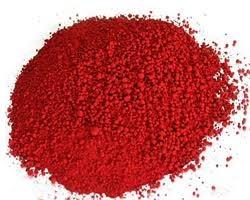
Cuprous oxide red extra pure, also known as copper(I) oxide (Cu2O), is a red crystalline powder with a cubic crystal structure. Its red color intensity depends on particle size, ranging from yellow to dark red. It has a melting point of approximately 1232°C and a density of about 6.04 g/cm³. Cuprous oxide is practically insoluble in water but soluble in ammonia and reacts with hydrochloric acid to produce cuprous chloride.
This compound occurs naturally as the mineral cuprite and is widely used as a pigment in red glass, ceramics, and antifouling marine paints. It also serves as an agricultural fungicide, organic synthesis catalyst, and material for electroplating and semiconductor applications. The extra pure grade indicates high purity with minimal impurities, making it suitable for industrial and research applications requiring precise and stable material
Cuprous chloride extra pure is typically supplied as high-purity copper(I) chloride (CuCl) with assay around 96–97% or higher, in the form of a greyish white to light green crystalline powder that may slowly turn greenish or brown on exposure to air and light.
Identity and composition
Chemical name: Cuprous chloride; Copper(I) chloride.
Molecular formula: CuCl; molecular weight about 99.0 g/mol.
Typical grade specification: Extra pure/Extrapure with minimum assay 96–97% CuCl, with tight limits on impurities such as sulphate, iron, and arsenic (e.g., sulfate ≤0.05%, Fe ≤0.01%, As ≤0.0002%).
Physical properties
Appearance: Greyish white to light green crystalline powder; can become greenish on exposure to air and brownish on prolonged light exposure.
State: Solid at room temperature; odorless.
Density: About 4.14 g/cm³.
Melting point: Around 430 °C; boiling point around 1490 °C.
Solubility: Sparingly soluble in water (about 0.6 g per 100 mL); soluble in concentrated hydrochloric acid and in some complexing media such as ammonium hydroxide.
pH: A suspension (e.g., 50 g/L) in water shows slightly acidic pH around 5 at 20 °C.
Typical uses
Extra pure cuprous chloride is used where relatively low impurity levels are important, for example:
As a reagent in inorganic and coordination chemistry and in analytical applications.
In organic synthesis and catalytic systems involving copper(I) species (e.g., as a source of Cu(I) in coupling or addition reactions).
In specialized industrial processes (e.g., as an absorbent for carbon monoxide in gas purification systems), often when a high-purity grade is preferred to minimize contamination.
Handling and safety (brief)
Hazard classification: Commonly labeled with hazard statements indicating harmful if swallowed and very toxic to aquatic life (e.g., H302, H410) and pictograms GHS07 and GHS09 with signal word “Warning.”
Key precautions: Avoid ingestion and inhalation of dust; prevent release to the environment; store in tightly closed containers away from light and moisture to limit oxidation to cupric species.
For catalog use, a concise description could read along the lines of: “Cuprous chloride, extra pure, CuCl, assay min. 97%, greyish white crystalline powder, slightly water-soluble, mp ~430 °C, for laboratory and synthesis use; harmful if swallowed and very toxic to aquatic life.”
Cuprous bromide extra pure is a high-purity form of copper(I) bromide (CuBr), typically with a minimum assay of 97–98%, appearing as a white to pale green or light green powder that may darken to green or blue on exposure to light or air.
Identity and Composition
Chemical name: Cuprous bromide; Copper(I) bromide (anhydrous).
Molecular formula: CuBr; molecular weight 143.45 g/mol.
Grade specifications: Extra pure with min. 97% assay; low impurities like Fe ≤0.05%, SO4 ≤0.5%, As ≤0.005%.
Physical Properties
Appearance: White, pale green, or light green powder/crystal; turns green/dark blue in sunlight.
Density: 4.71–4.98 g/cm³.
Melting point: 504 °C; boiling point: 1345 °C.
Solubility: Insoluble in water and acetone; soluble in HBr, HCl, NH4OH; slightly soluble in cold water, decomposes in hot water.
Typical Uses
Extra pure cuprous bromide serves as a catalyst in organic synthesis (e.g., Sandmeyer, Ullmann coupling, ATRP polymerization), in photochemistry and photography emulsions, gas purification (e.g., acetylene removal), and material science for semiconductors.
Handling and Safety
Classified with hazards like skin/eye irritation and respiratory issues (H315, H319, H335); GHS07 pictogram, signal word 'Warning'. Store in closed containers away from light/moisture; handle dust carefully to avoid inhalation.
For catalog purposes: “Cuprous bromide, extra pure, CuBr min. 97%, pale green powder, mp 504 °C, insoluble in water, catalyst for organic synthesis; causes skin/eye irritation.”
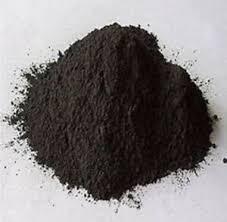
Cupric sulphide extra pure refers to high-purity copper(II) sulfide (CuS), typically ≥99% assay, supplied as a black crystalline powder or lumps for laboratory and specialized applications where low impurities are essential.
Identity and Composition
Chemical name: Cupric sulfide; Copper(II) sulfide.
Molecular formula: CuS; molecular weight 95.61 g/mol.
Grade specifications: Extra pure variants achieve 99.5% purity, often -100 mesh particle size, with minimal contaminants for semiconductor or reagent use.
Physical Properties
Appearance: Black powder or lumps.
Density: 4.6 g/cm³.
Melting point: 500 °C (decomposes).
Solubility: Insoluble in water; hygroscopic nature requires careful storage.
Typical Uses
Extra pure cupric sulphide finds application in semiconductors, photo-optic devices, thin-film synthesis (e.g., covellite phase for antimicrobial or plasmonic properties), and as a precursor in nanotechnology.
Handling and Safety
Hygroscopic; store in sealed containers to prevent moisture absorption. Limited specific hazard data in sources, but treat as irritant and avoid dust inhalation; general precautions for metal sulfides apply.
For catalog use: “Cupric sulphide, extra pure, CuS ≥99%, black powder, density 4.6 g/cm³, mp 500 °C (dec.), insoluble in water, for semiconductors and synthesis; hygroscopic.”
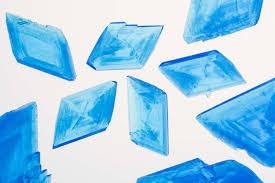
Cupric sulphate pentahydrate crystals, known as CuSO₄·5H₂O, form a bright blue triclinic crystalline solid with a polymeric structure where copper adopts octahedral coordination bound to four water ligands, interconnected by sulfate anions.
Identity and Composition
Chemical name: Copper(II) sulfate pentahydrate.
Molecular formula: CuSO₄·5H₂O; molecular weight 249.69 g/mol.
Crystal system: Triclinic with unit cell dimensions a=6.12 Å, b=10.7 Å, c=5.97 Å, α=82°16′, β=107°26′, γ=102°40′; space group Pī, Z=2.
Physical Properties
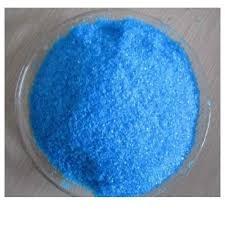
Appearance: Vivid blue transparent crystals or crystalline powder.
Density: 2.286 g/cm³.
Melting/decomposition: Decomposes on heating in stages (e.g., to trihydrate, monohydrate, then anhydrous); exothermically soluble in water forming [Cu(H₂O)₆]²⁺ aquo complex.
Typical Uses
Commonly used in laboratory reagents, electroplating baths, educational demonstrations (e.g., hydration/dehydration), agriculture (fungicide), and crystal growth studies influenced by cooling rates or additives like NaCl for morphology control.
For catalog purposes: “Cupric sulphate pentahydrate crystals, CuSO₄·5H₂O, bright blue triclinic crystals, density 2.286 g/cm³, water-soluble, for lab reagents and demos; efflorescent.”